
Your Gateway to the World: The Most Overshadowed Country in the Middle East
BY KATIE HODGES
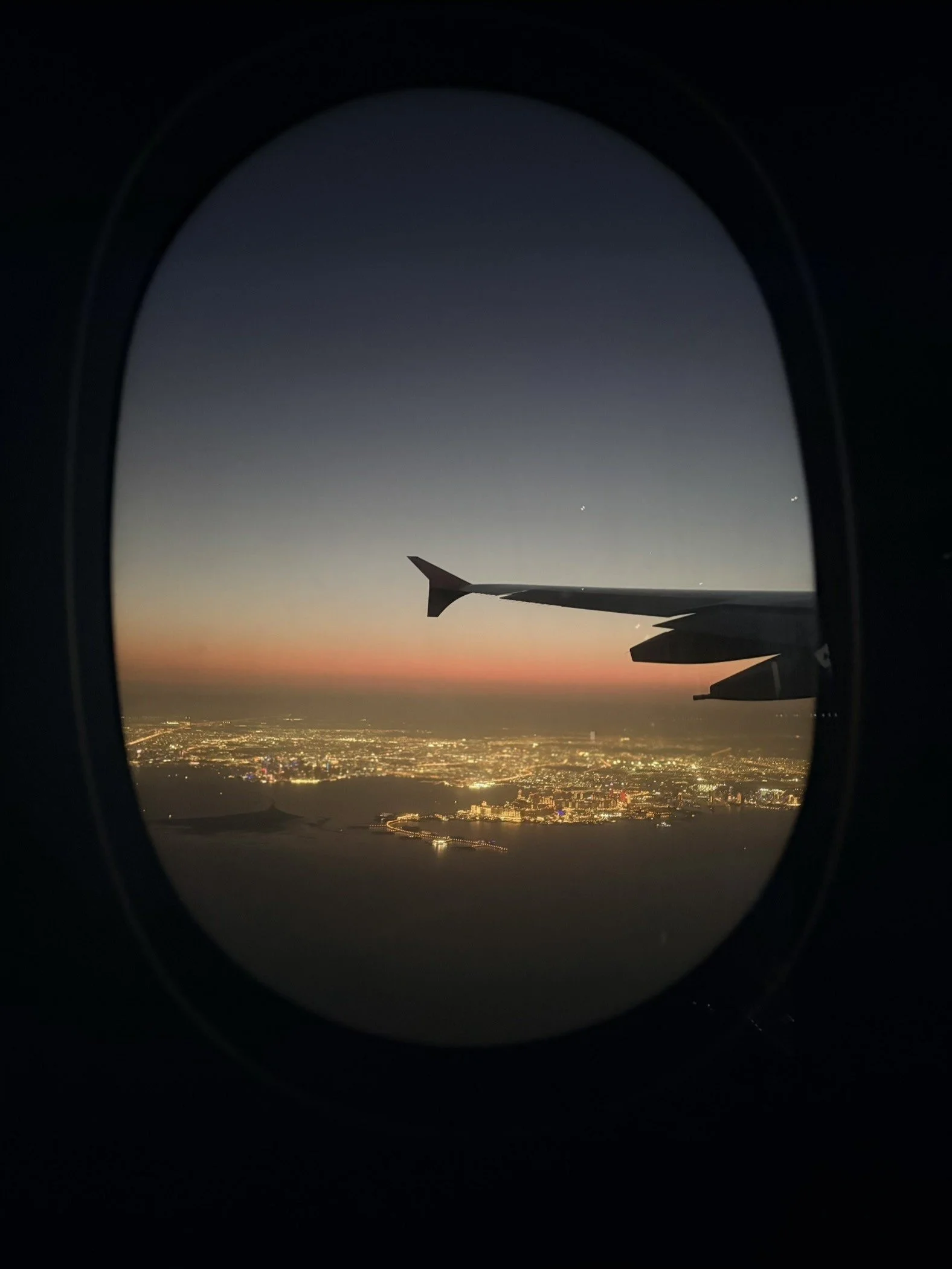
The view of Doha during our descent
If you’d asked me one year ago to find Doha on a map, my response would’ve been embarrassing. The capital of the small gulf nation of Qatar isn’t exactly an international tourist destination – at least, not compared to its glitzy neighbor Dubai, despite the similarities between their euphonious names and superbly wealthy oil-backed governments. Pitted against the city that has become epitomized by roaring race cars, crystal skylines, 7-star hotels and in-your-face luxury, Doha might easily risk fading into obscurity. And what a colossal loss that would be.
I had the privilege of visiting Doha last February with a friend, whose father lives there on an expat assignment (a tale as old as time for any oil-and-gas engineer). When my friend and her mother offered to take me with them at the next half-term break, I practically jumped at the offer. Sure, in the past, Doha may have only crossed my mind as one of the world’s busiest layover destinations, but the prospect of visiting this far-away and mysterious country, with its promise of luxury that had yet to be defined by viral Instagram posts, was an offer too alluring to turn down. I packed my bags and jumped onto the next Qatar-bound flight.
How does one explain the feeling of arriving in a country that is so ancient and yet so sparkling, so remote and yet constantly buzzing with an incessant flow of non-stop layovers? As our plane began its descent, we were greeted by the amber gleam of a desert sunset and a small constellation of city lights scattered against the black ocean. ‘Welcome to Hamad International Airport,’ a flight attendant chirped over the loudspeaker, ‘your gateway to the world.’ An apt description indeed - after touching down, we were among the few straggling passengers who didn’t follow the signs labeled, ‘Connections.’
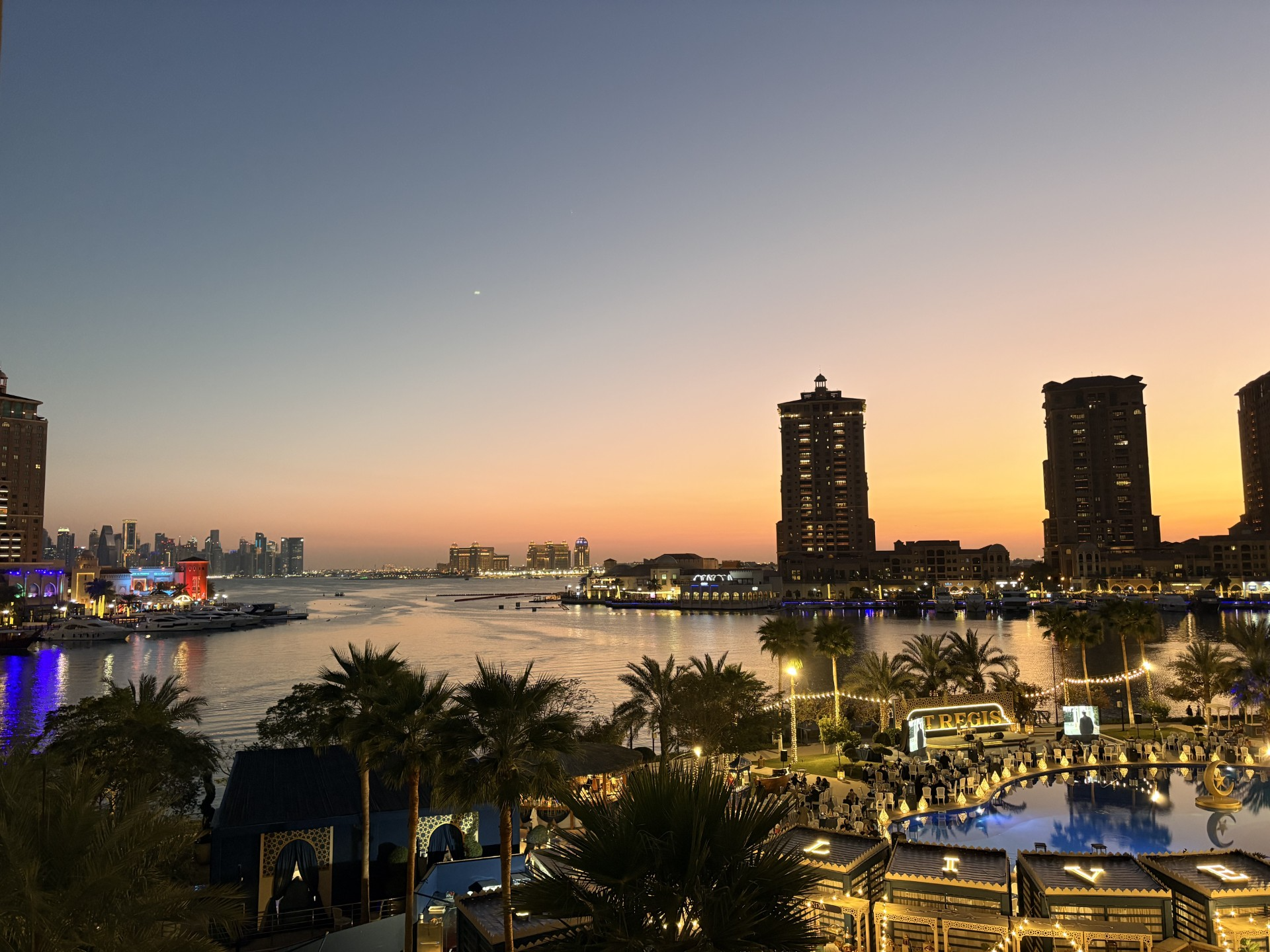
The view from our hotel balcony. In the lefthand corner, the distant buildings make up the downtown skyline. To the right, the chairs, tables and cabanas which have taken over the pool are set up for hosting the nightly iftars and suhurs.
It’s not easy to condense the trip that followed into a single article, but I’ll try my best. Doha is, as I would soon discover, a city of contradictions; surrounded by the pale dunes of the Arabian Desert on one side and the turquoise Persian Gulf on the other, one might say that the metropolis is a contrast in and of itself. Clusters of skyscrapers are loosely linked by long stretches of highways and bare sand like jewels strung along the chain of a necklace (perhaps reminiscent of the country’s pearl diving past). Luxury echoes all around you, flaunting itself in extravagant hotel names dotted conspicuously across the city. Yet their polished halls remained mostly void of tourists - such a word implies people who are there to see the city itself, whereas the majority of visitors were there, like me, for the friends and family who make up the large network of oil and gas expats having taken up residency within the hotels. The government wants to attract more tourists, my friend’s parents explained to me as we sipped mint lemonade on a restaurant balcony. But as I look around, the only hotels within sight are for a very specific, uber-wealthy demographic. It perhaps isn’t so surprising that the only people who end up staying in them are expats on company credit cards.
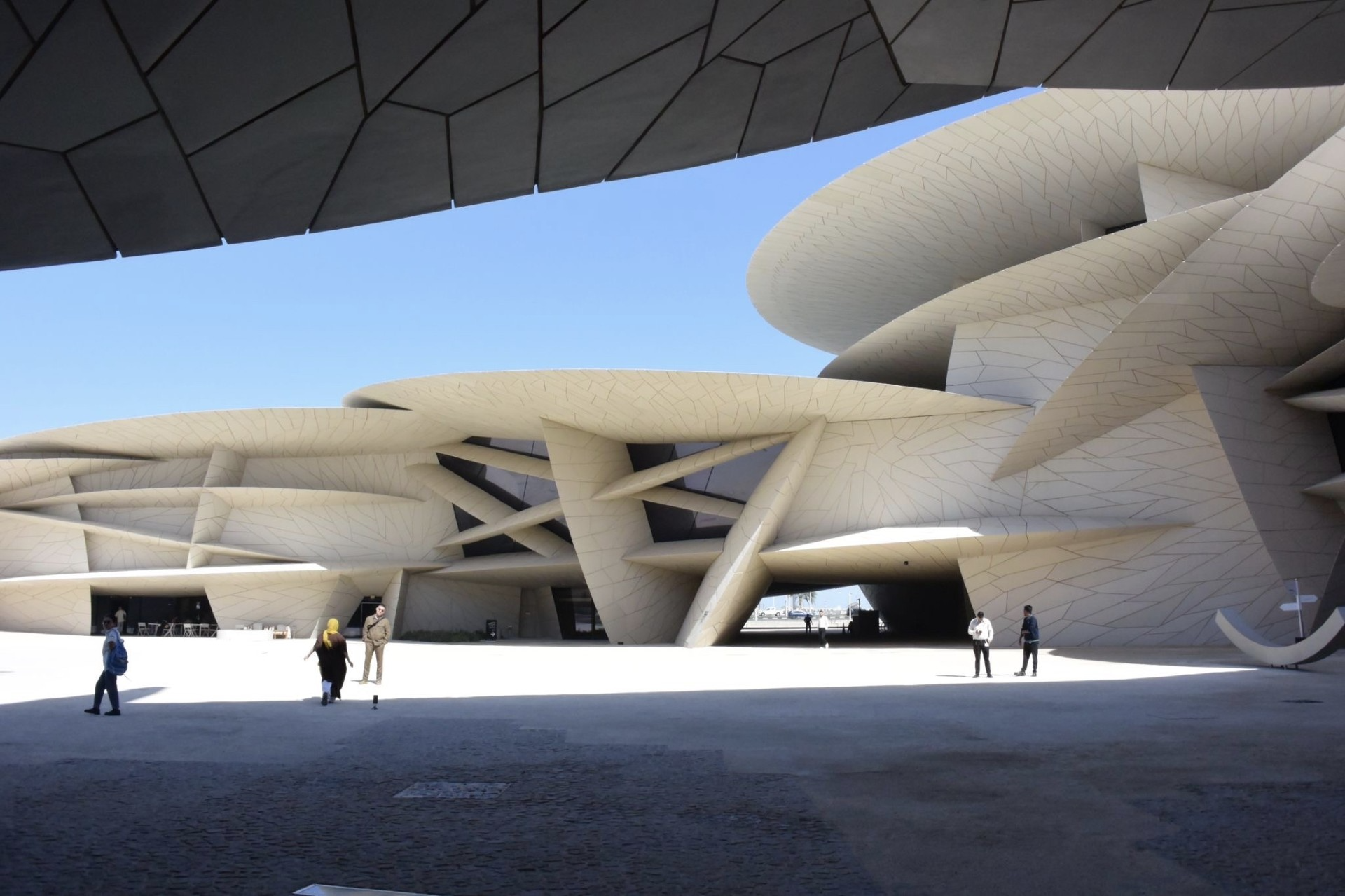
The stunning architecture of the National Museum of Qatar
Our own hotel, the St Regis, was nestled within the Pearl, a man-made island teeming with all manner of cosmopolitan vibrancy to facilitate shopping and high-dining addictions. To anybody visiting Qatar, I’d recommend starting here: the Pearl is a fascinating place to explore, from the pastel canals of Little Venice to the mesmerizing canopy of the Crystal Walk on Gewan Island (the latter holds the record for being the largest outdoor interactive light canopy, so be sure to go at night, when you can marvel at the colorful lights display). Meanwhile, if you’re looking for culture (and even if you aren’t), the National Museum of Qatar is not to be missed. This was easily a highlight of my trip: a marvel of contemporary architecture, the building consists of hundreds of enormous interlocking disks designed to mimic the delicate structure of a desert rose. Within the lofty rooms, visitors are taken through the multiple-million-year journey of Qatar’s history, spanning from the evolution of prehistoric life all the way to the country’s emergence as a trucial tycoon. There’s also the Katara Culture Village, a district devoted to displaying Qatar’s artistic heritage via a showcase of traditional architecture and cultural activities (the crown jewel of this is, in my opinion, the Katara Mosque, whose walls feature a breathtaking mosaic of turquoise and purple tiles). From here, visitors can stroll along to the waterfront promenade and admire the distant skyline reflected across the still bay. What a contrast to behold: behind you, streets designed to replicate the old beauty of lost Qatari villages; ahead, a glassy ode to the conquests of oil and gas.
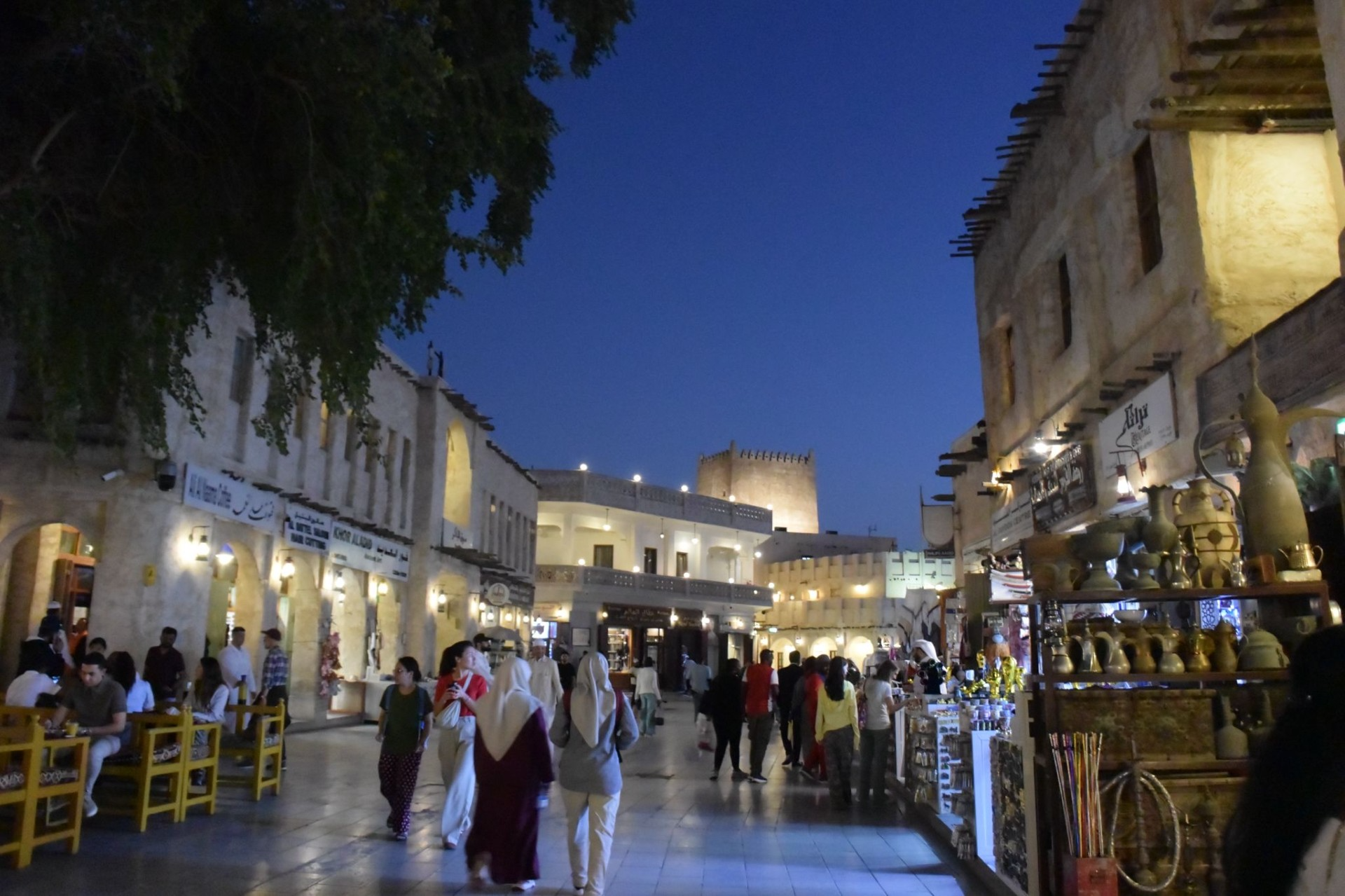
Souq Waqif
There is perhaps no better example of this persistent dichotomy between old and new than what lies behind the walls of the Souq Waqif. At first glance, this vibrant labyrinthine marketplace seems as ancient as the Roman Colosseum or Angkor Wat: narrow, rambling alleyways snake back and forth over dusty pathways, rough plaster is stripped away to reveal coarse stone walls and exposed wooden beams. Here, every step along the spectrum between local and tourist trap is covered, with shops selling plastic trinkets washed in fluorescent lighting crammed next to cascades of traditional fabrics and advertisements for leather sandal repairs. There’s even a falcon souq, where one can find everything from falconry supplies to veterinary care for their feathered companion, which is neighbored by the stables where horses or camels can be casually stashed while their owners shop. Maybe this is it, I thought - the authentic Qatar. The rustic and rough-around-the-edges delights of the souq are surely the last remnants standing of the city’s ancient heritage.
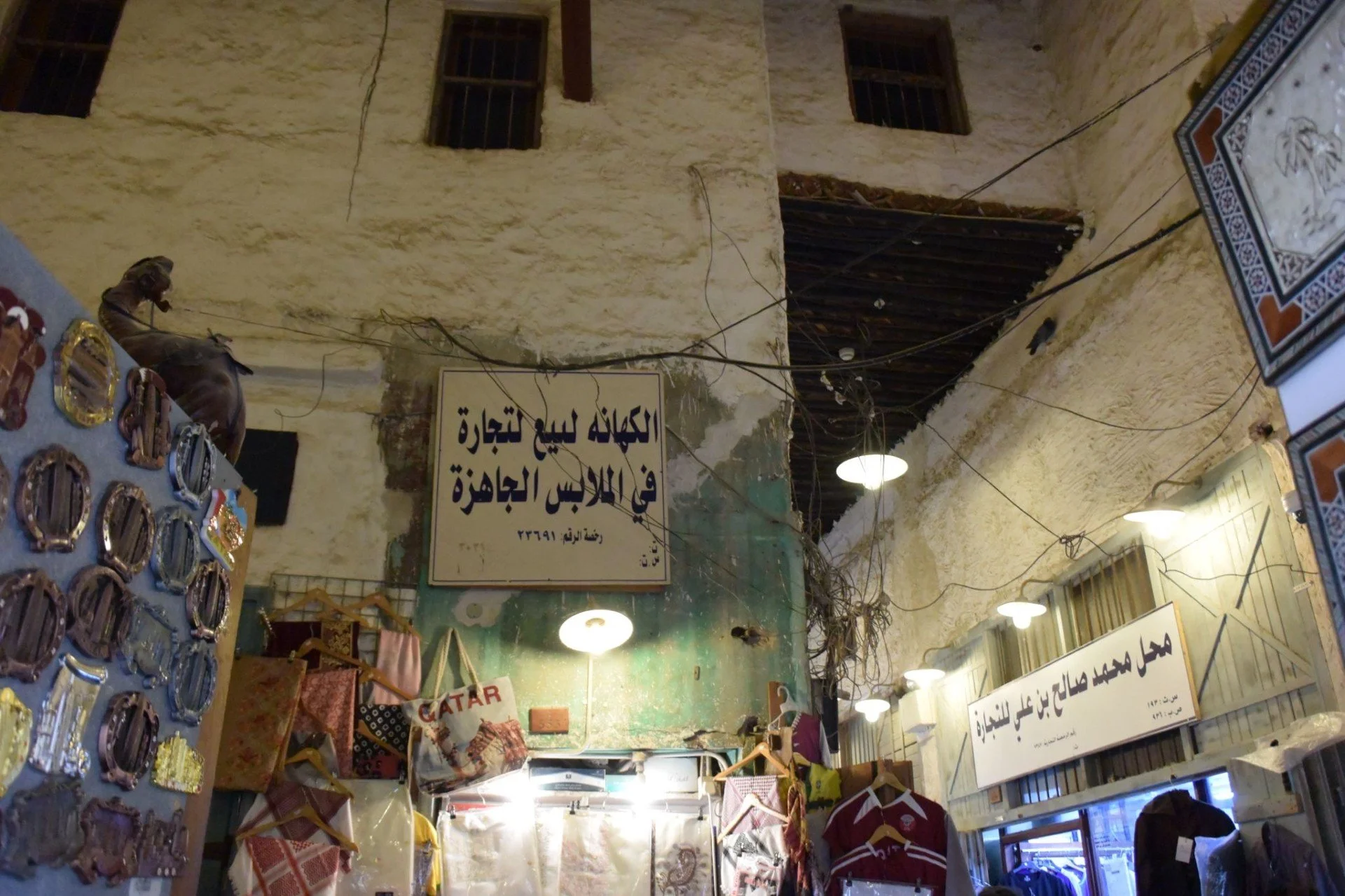
Inside Souq Waqif
But what appears dreamy and ancient is actually the product of a 2000s building project: Souq Waqif was designed to replicate what traditional markets used to look like; in that sense, it might not be so far to say that the marketplace has more in common with Disneyland than Angkor Wat. But while the souq may be lacking in the authenticity that so many tourists crave, there is something very real about the buzz of its streets as shoppers pour through them after the Ramadan sun has set, the vendors hawking their wares late into the night, or the sizzle of countless grills on every corner. Maybe the ‘authentic’ Qatar is this strange, hypnotic balance between old and new, this quest to capture history amidst an increasing pressure to modernize.
We spent quite a few evenings hopping between rooftop bars in search of nighttime views, and I can confidently say that the best one is to be found at the Acoustic Penthouse in Katara Towers. This enormous crescent-shaped marvel stands out within the relatively empty skyline of Lusail (a district built to host the World Cup back in 2022) and it offers a lively bar on its top floor with panoramic vistas facing the rest of the city. The catch is, if you’re under twenty-one, don’t expect to be allowed to stay (even for a non-alcoholic drink). My friend and I were seventeen and eighteen respectively. Accompanied by her parents, we were shocked to learn that the bar had an extremely strict twenty-one-and-over policy which extended to all its guests, not just the ones buying alcohol. With the permission of the extremely kind hostess, we were able to step out onto the balcony to snap a few pictures - but then we were promptly rushed out of the door. This is, as it turns out, a common policy throughout Qatar: alcohol regulations are exceptionally tight (you need to obtain an alcohol license to even purchase it for yourself) and we had to try many bars before we found one at the Kimpinski which allowed me and my friend to stay. Every establishment we went to asked to see our passports before we could enter, this being the only form of ID which they would accept. However, once we were finally able to rest at the Kimpinski bar, the view and lively atmosphere did not disappoint. My friend and I couldn’t order drinks, but in any case, hot chocolate and spiced nuts were the perfect antidote to the desert night chill.
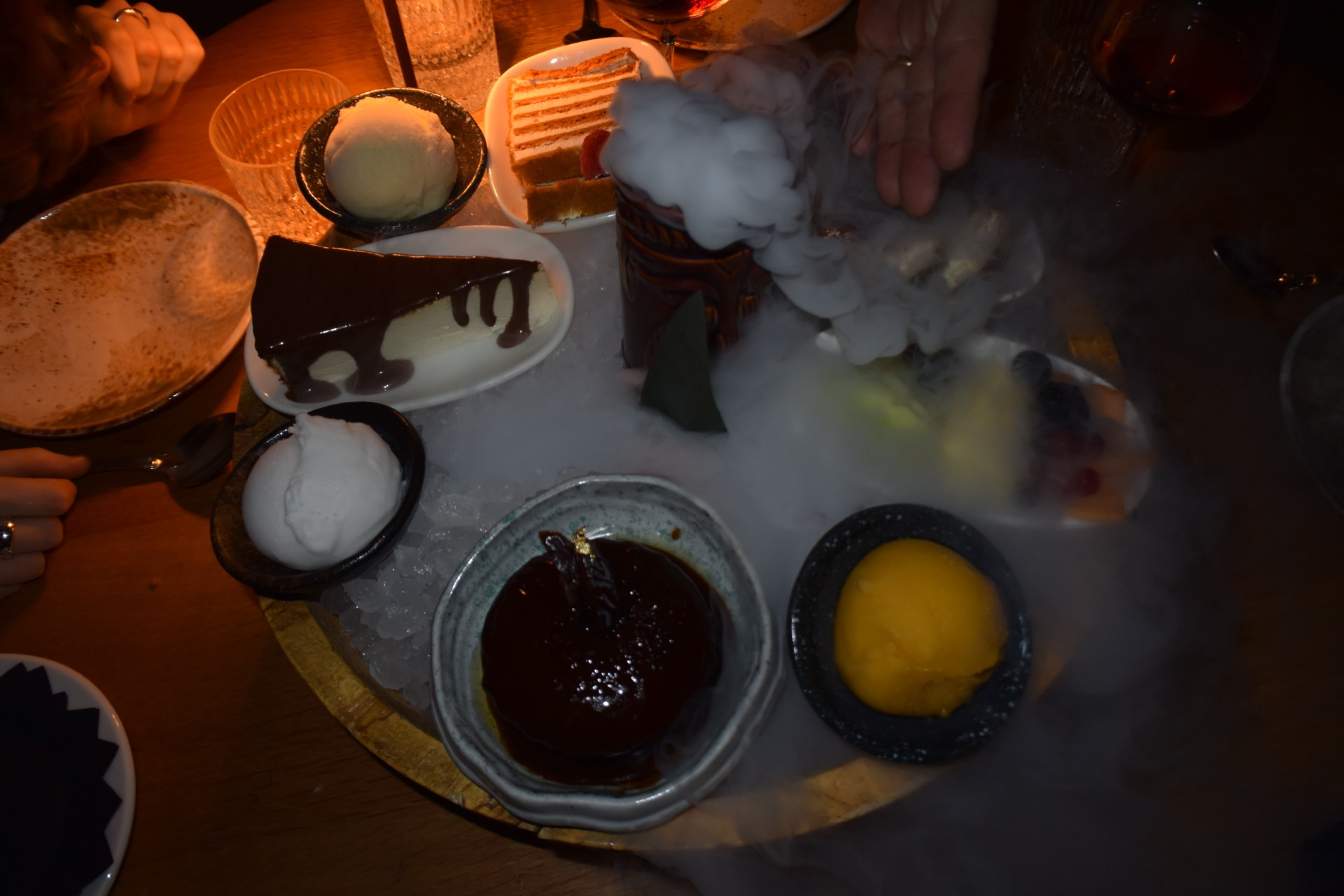
Dessert is served in style at Novikov.
Indeed, Doha is a food lover’s paradise. My favorite restaurant that we tried was Novikov, a beachfront spin on Mayfair’s glamorous lounge serving a fusion of Italian and Asian cuisines via extravagant table settings and dry ice wheels. If, like me, you’re a lover of all things caffeinated, be sure not to miss Qinwan Café, an opulent brunch oasis specializing in date-themed delicacies that range from date lattés to a whole countertop of stuffed dates arranged into glistening pyramids. Bacha Coffee is another fantastic place to satisfy your caffeine cravings, offering literally hundreds of types of coffee from within the palatial Place Vendôme. However, perhaps surprisingly, the best coffee I had during the whole trip was from a street stand in Souq Waqif called Qahwat Barzan - their Arabic coffee was rich, smoky and perfect for sipping periodically while wandering through the crowded streets.
On the topic of dining, Ramadan began during the second half of my trip to Qatar. Suddenly, in a way that I had never anticipated, I was bearing witness to one of the world’s largest religious traditions in a country where religion plays an unparalleled role in the lives of almost all of its inhabitants. Even within the walls of our hotel, where most guests were Western expats, we noticed the changes: restaurants were shut down and staff reallocated to other tasks, breakfast was carried out behind screened-off rooms, the main swimming pool was taken over by a sumptuous parade of food stalls in anticipation of the nightly iftars and suhurs. During the day, a stifling silence permeated the baking streets, but this was broken by raucous celebration as soon as the Iftar Cannon fired.
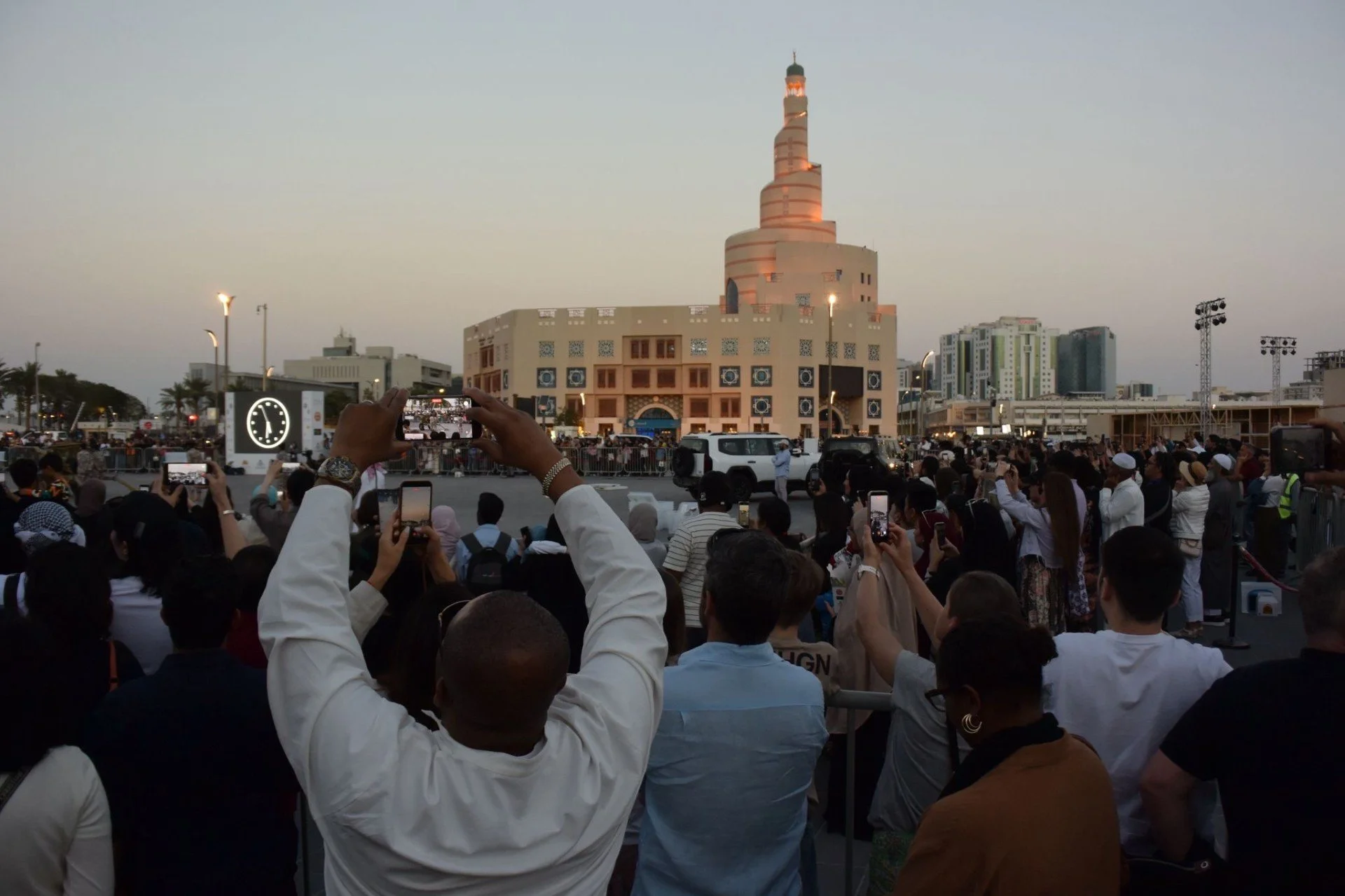
A crowd of Ramadan practitioners waits for the countdown to the Iftar Cannon, when they can officially eat and drink again.
Being considerate observers of Ramadan meant respecting the customs that surrounded it. We refrained from eating or drinking in public (I remember ducking down below our car’s windows whenever we wanted a sip of water so as not to be seen by passersby), and we were rewarded with the opportunity to partake in an iftar, the feast which breaks the daytime fast. In Doha, each hotel attempted to outdo the other’s nightly celebrations, and the St Regis did not disappoint, with lavish splashes of decorations and stands heaped with all types of cuisines. My jaw basically fell to the floor when I discovered that the entire pool bar was repurposed into an Arabic dessert station! It was a meal that I will remember for a long, long time: there was something so wonderfully surreal about the crackle of joyful indulgence against a constant background of happy chattering and chiming silverware, crowds of families coming and going into the early hours of morning. It was a party without an end. The city, lulled into sleep during the day, was completely reawakened after dusk.
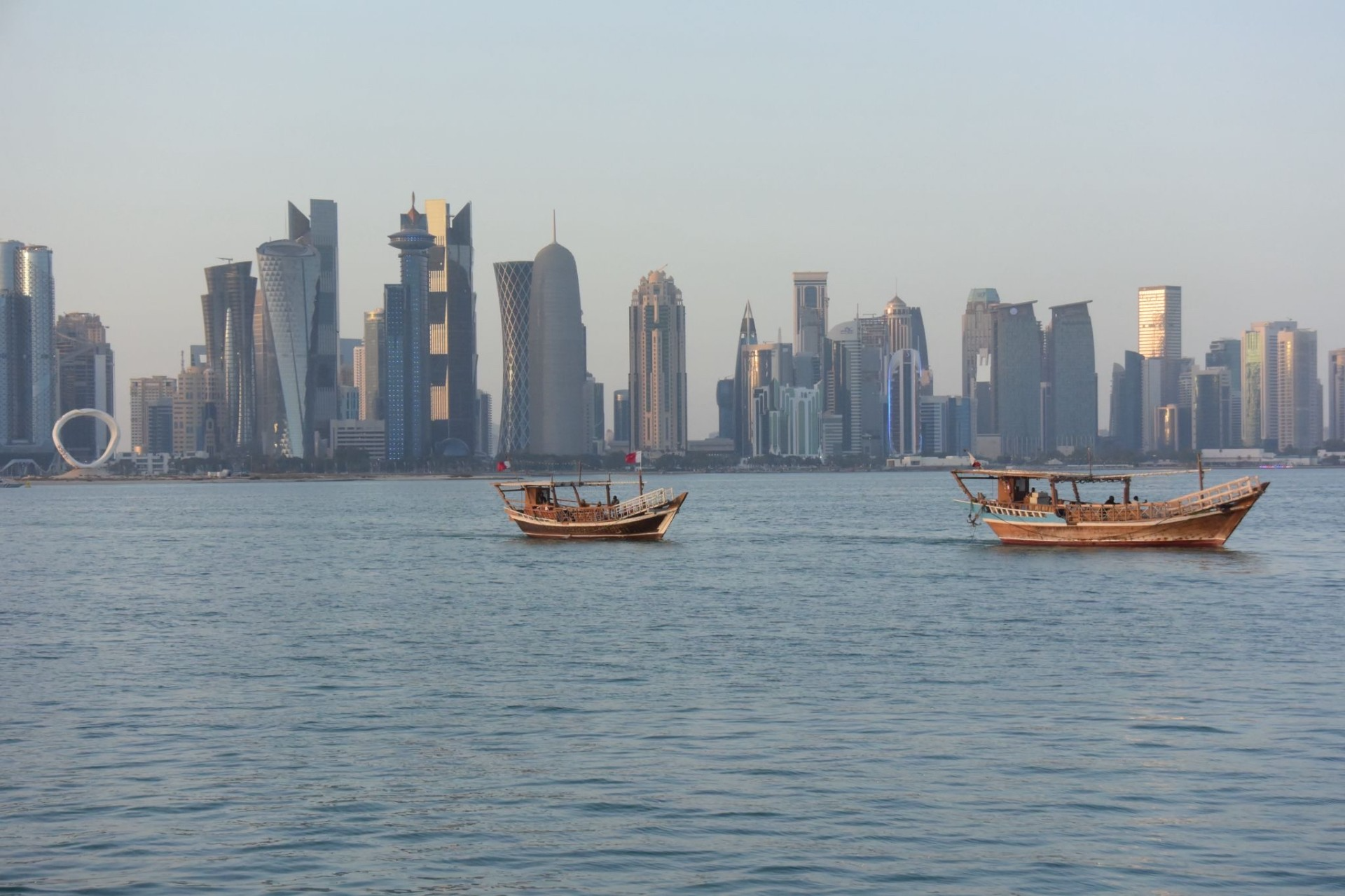
The view of the ultramodern skyline. In the foreground are dhows, traditional trading boats.
Except this might not be the case for much longer. Doha is becoming increasingly Westernized in the Qatari government’s attempt to enhance its tourism appeal. For reference, we can look back to that not-so-distant shadow of Dubai, which underwent a similar process of Westernization as the UAE invested heavily into non-oil industries, attempting to diversify its income. Is Doha headed in the same direction? It certainly seems like it. Doha is what Dubai was like “twenty years ago”, my friend’s parents mused - and they have spent a significant amount of time living in both cities. For evidence, they told me, look no further than this year’s Ramadan. Previously, they’d go to a nearby bakery to find that the chairs and tables had been cleared away, the windows shuttered. But this year, this same bakery’s furniture was merely shoved to one side; the counter was still providing takeaway coffees.
A self-conscious country which is desperately working to make itself attractive beyond its desirable placement for layovers, but with stringent regulations towards its visitors.
A hub of investment propelling itself into the future while clinging to the idealisms of the past.
A hopeful haven for tourists en masse, but without the hotels to cater to more than a small sliver of the traveling population.
The culture is changing to adapt to a less traditional climate. Qatar, a country of extreme wealth and luxury, is fighting with itself to stay relevant in a world where tourism is no longer exclusive to the wealthy. Perhaps this is the greatest of all its contradictions.
Photo Credit: Katie Hodges