
Theatre Review: Hadestown – The Musical (Proshot)
A Crosswalk and LD Entertainment Production
26/10/2026 – still in cinemas
Written by Anaïs Mitchell
Directed by Brett Sullivan
Produced by Hunter Arnold, Dale Franzen, Mara Isaacs and Tom Kirdahy
BY JENNIFER SCHLOSKE
Since its Broadway debut in 2019, Hadestown has been a sweeping success story. Written by Anaïs Mitchell, the musical has garnered fourteen Tony Award nominations and the 2020 Grammy Award for Best Musical Theatre Album. It debuted on the West End in 2024, where I had the fortune of seeing it repeatedly (some may say excessively). In 2025, the five main original Broadway cast members returned for a limited West End run and to film a proshot, directed by Brett Sullivan. When it aired in American cinemas in July 2026, it surpassed Hamilton as the highest-grossing musical recording of all time. While initially scheduled for a limited run of five nights, it was soon extended due to popular demand. Its UK run started in October 2026, and it has since made over $23 million at the worldwide box office.
Inspired by New Orleans jazz and American Folk, Hadestown reimagines the story of the young lovers Orpheus and Eurydice, played by the real-life married couple Reeve Carney and Eva Noblezada who met during the play’s initial National Theatre and Broadway run. Their story is intertwined with the unstable relationship of Hades and Persephone, sung by Patrick Page and Amber Gray. Hermes, filling the role of narrator and psychopomp (a being who guides the souls of the dead to the afterlife), is played by André de Shields. The remaining actors are part of the original West End cast, which is in itself iconic because of the West End cast recording released in 2024: Bella Brown, Madeline Charlemagne and Allie Daniel stun and intimidate as the three fates, while Lauren Azania, Tiago Dhondt-Bamberger, Ryesha Higgs, Waylon Jacobs and Christopher Short make up the workers/chorus.
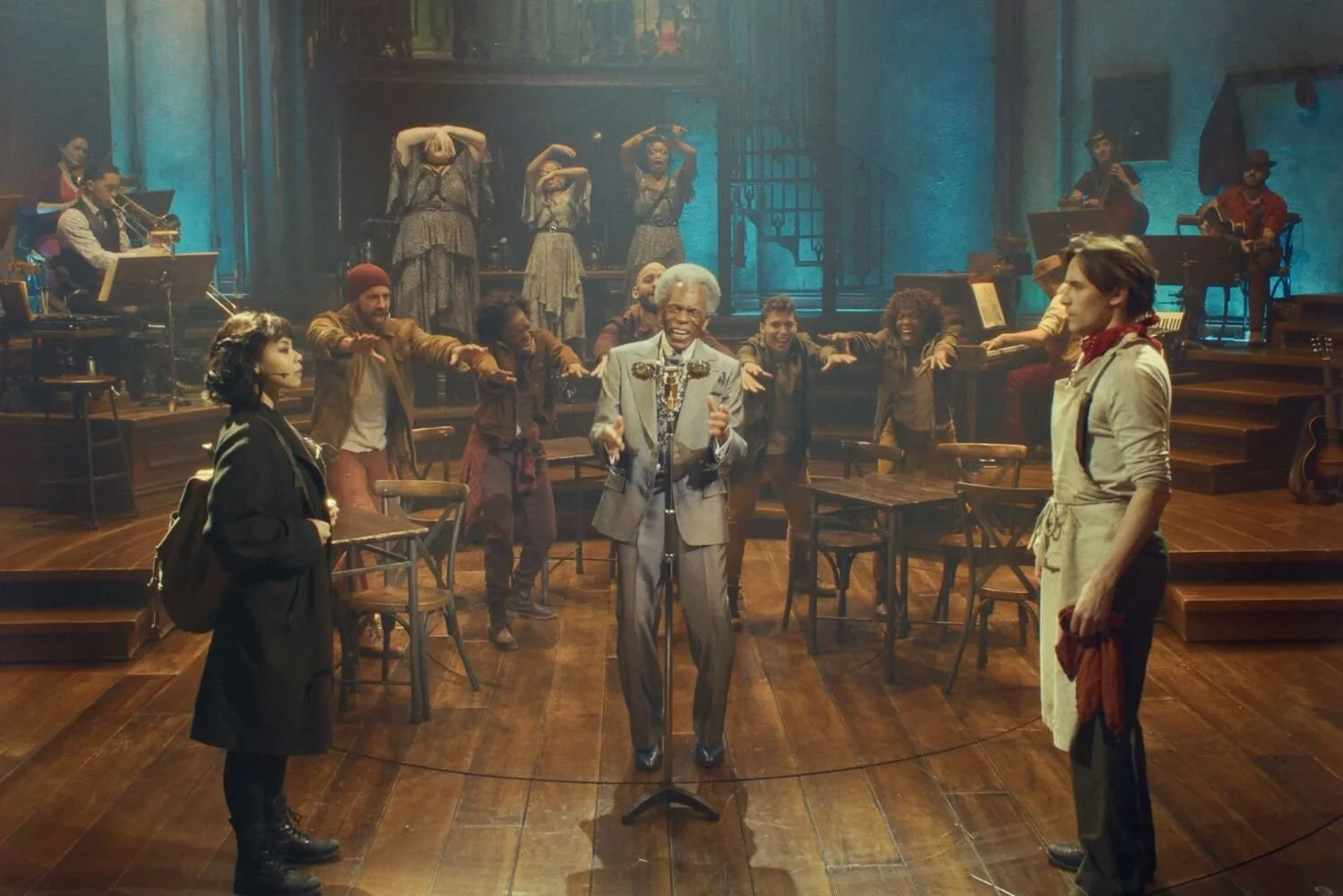
Eva Noblezada (Eurydice), André de Shields (Hermes) and Reeve Carney (Orpheus) © Crosswalk and LD Entertainment
Hadestown is ambiguously timeless and placeless. We find ourselves in a post-apocalyptic nowhere, in a speakeasy or a railroad station, while the music and setting evoke prohibition-depression era New Orleans. And yet – ‘Don’t ask where, brother, don’t ask when,’ Hermes reminds us. Because Hadestown does not firmly ground itself in a specific setting, its lyrics take flight, transform, gathering new layers of meaning. On the surface, it is a retelling of the ancient myths–it’s a love song, a tragedy. But under the surface bubbles a host of other interpretations, made possible by Hadestown’s contextual ambiguity.
Hadestown is ambiguously timeless and placeless. We find ourselves in a post-apocalyptic nowhere, in a speakeasy or a railroad station, while the music and setting evoke prohibition-depression era New Orleans. And yet – ‘Don’t ask where, brother, don’t ask when,’ Hermes reminds us. Because Hadestown does not firmly ground itself in a specific setting, its lyrics take flight, transform, gathering new layers of meaning. On the surface, it is a retelling of the ancient myths–it’s a love song, a tragedy. But under the surface bubbles a host of other interpretations, made possible by Hadestown’s contextual ambiguity.
Because of this, Hadestown works as a parable for issues that shape ‘the world we live in now’: Hades is an insecure, deeply hurt industrial autocrat, a prime example of toxic masculinity. His obsessive wall-building, which is his means of securing power, is accidentally topical for its resonances with US politics, although Mitchell started writing the musical before Donald Trump was even in power. The underworld-arc, during which Orpheus starts a workers’ revolution, reads as a critique of late-stage capitalism. Hadestown emphasises community and communal action: ‘what’s the use of his backbone / if he never stands upright / if he turns his back on everyone / that he could have stood beside,’ the workers ask. Hades and Persephone’s relationship is troubled, which upsets the natural world and echoes the current climate crisis: because her husband takes her home to Hadestown prematurely, the seasons are out of joint. Persephone, deeply hurt and empathetically portrayed by Amber Gray, laments, ‘the harvest dies and people starve / oceans rise and overflow / it ain’t right and it ain’t natural.’
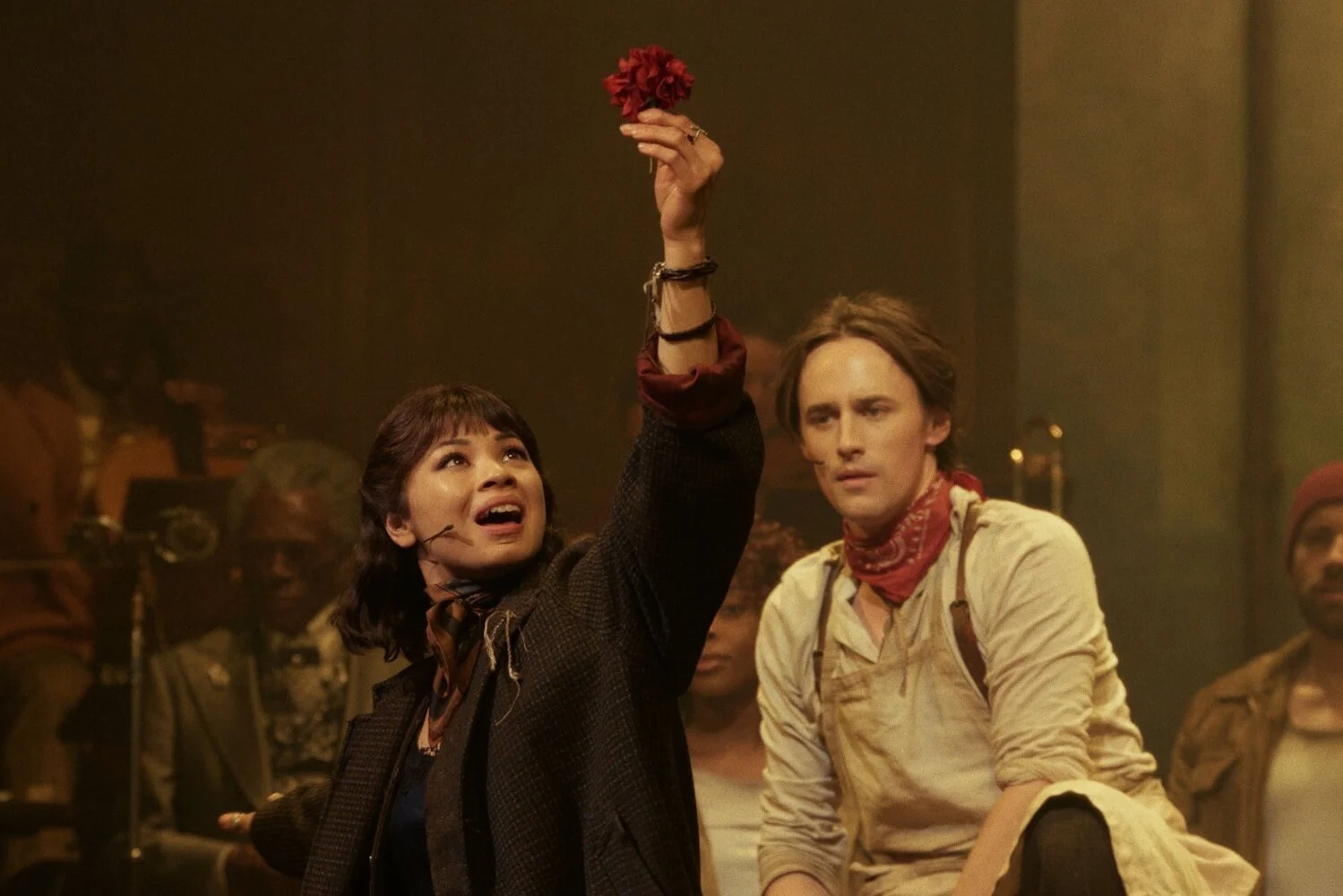
Eva Noblezada (Eurydice) and Reeve Carney (Orpheus) © Crosswalk and LD Entertainment
Ultimately, Hadestown is a commentary on what art can – and perhaps cannot – do. Orpheus and his singing have the power to “make you see how the world could be”, but success is not the point of the story. Whether Orpheus turns around to Eurydice in the end is one of the driving questions of the show, but no matter how it turns out, the point is that he tried. It is just as important that we witnessed it, that he could make us see how the world could be. The point is that we keep telling the story. The point is that we will try as well.
I have been excited for the proshot since it was announced in 2025. This October, I went to see it at Dundee Contemporary Arts and was blown away by the production quality and the artistic skill of everyone involved. It reshaped and expanded how I view the musical.
Before the show, the camera takes us backstage, where we see the actors getting ready for the performance. This underlines the ambiguous position of Hadestown between a stage retelling and a staged retelling – it is both a retelling of the Orpheus myth but also stages the act of telling itself. By showing the actors in costume but out of character, the proshot emphasises these slippages between theatrical mimesis and representation. To underline this, several fourth wall breaks occur during the show, alongside repeated shots of the audience, lit by dim house lights. However, there is something strange about watching Hadestown in a quiet cinema instead of being a part of the enthusiastic Lyric Theatre audience – it feels like witnessing the act of witnessing. This, to me, slightly changed the way I engaged with the musical – the communal feeling that is so integral to its argument does not completely translate to the film medium.
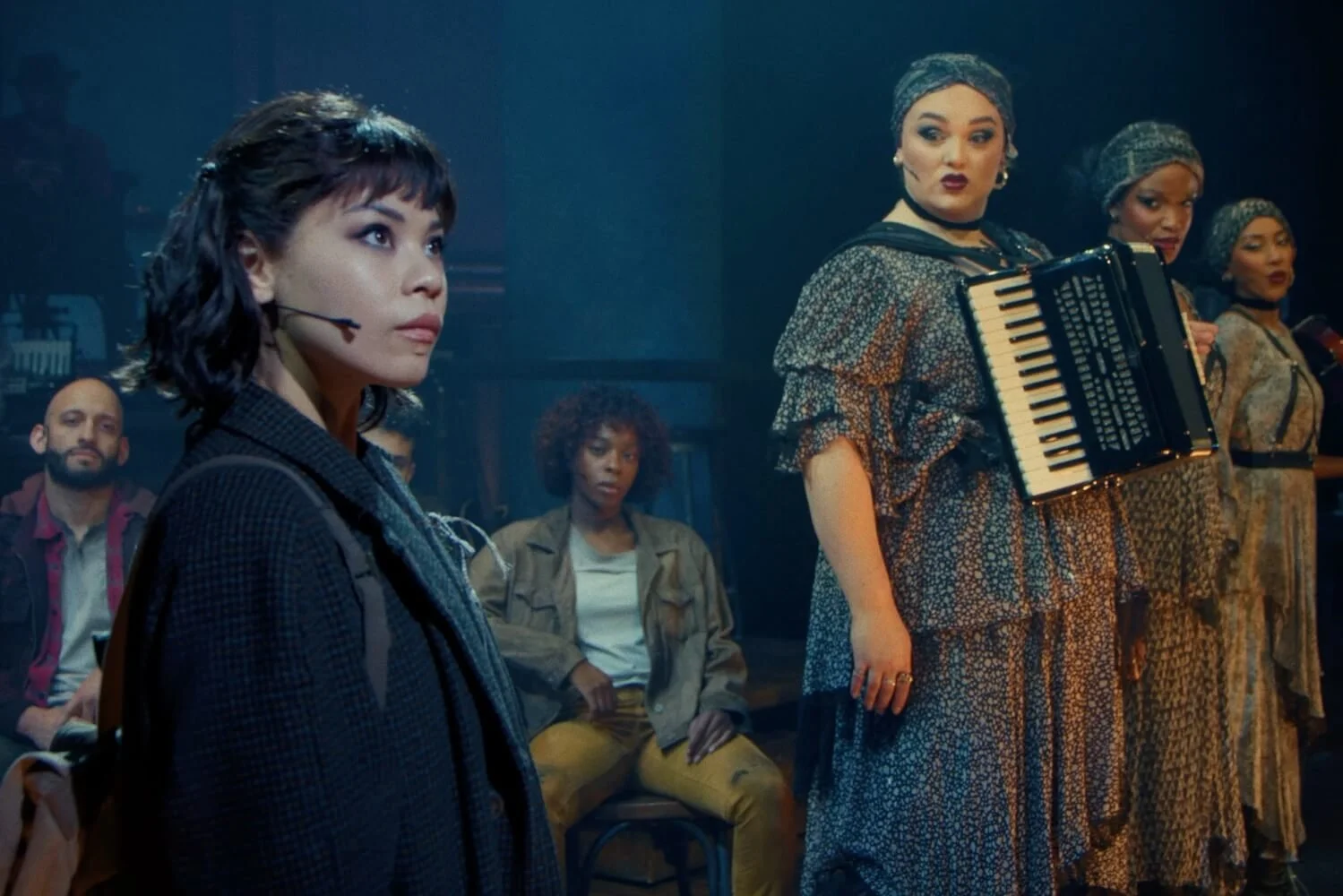
Left to right: Eva Noblezada (Eurydice) Allie Daniel (Fate), Madeline Charlemagne (Fate), and Bella Brown (Fate) © Crosswalk and LD Entertainment
To make up for this, the proshot utilises its medium to its full potential. The camera moves with the choreography, films down the hole created by the lowered turntable, and underscores the swinging motions of the iconic lamps during “Wait for Me”. Close-ups on the actor’s faces underline how completely they embody their characters – Patrick Page’s Hades is both terrifying and tender. During the show’s climax, “Epic III”, Orpheus points out that his obsessive, power-hungry autocracy is in fact caused by desperate insecurity. When Orpheus sings that “the thing that he’s building his walls around / is already lost”, Page’s face quivers, and a singular tear slips down his face. Eva Noblezada’s “Flowers” is one of the most heartbreaking renditions of the song I have heard so far. She sings herself to tears until she is hunched over in a sobbing heap in the middle of the stage. Noblezada is so reactive, in tune with her surroundings, and conveys so much through her body language that it made me view Eurydice in a new light. She embodies her complicated thoughts about love and attachment so intricately, and she seems genuinely terrified of the fates – and who can blame her? Allie Daniel’s otherworldly scales and riffs are hauntingly beautiful, and Madeline Charlemagne continuously invades her personal space, making her wince as if in anticipation of what is to come.
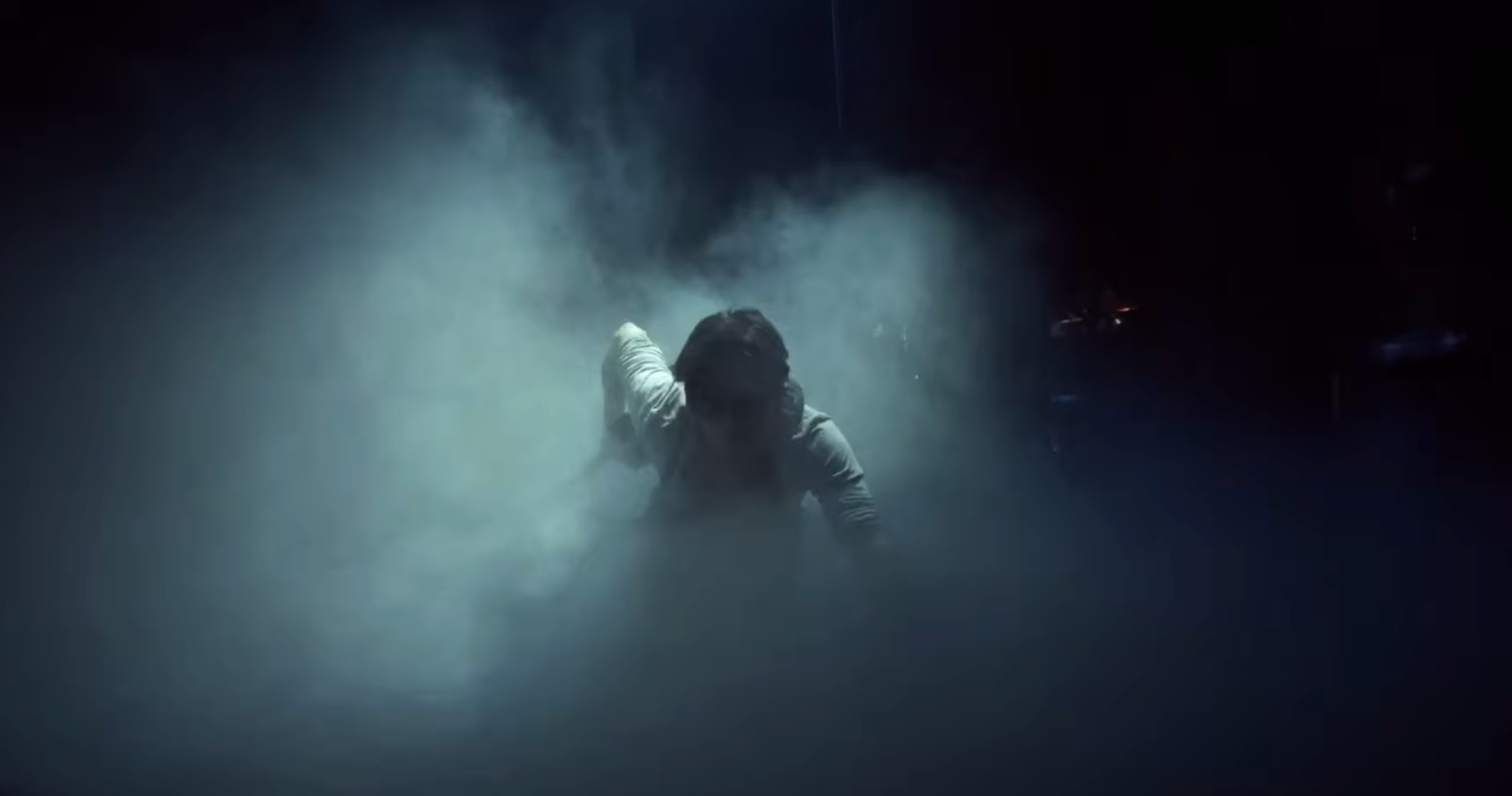
Reeve Carney (Orpheus) during “Doubt Comes In” © Crosswalk and LD Entertainment
Sometimes, I unsurprisingly found that some things translated better on stage. During “Doubt Comes In”, a large amount of screen time is spent on Orpheus’s face and the invasive closeness of the fates. The film shows this psychological process through Reeve Carney’s expression and captures the foggy, grim atmosphere on stage. While seeing it live, it was a wholly different, immersive experience: you are in a pitch-black auditorium, the stage is dark, and all you see is a dimly lit Orpheus who loses himself in empty space and the dark places of his own mind.
I was thrilled about the inclusive choice made around Patrick Page’s injury. During rehearsals, he tore his Achilles tendon, and it was uncertain if he could perform. For the proshot, the team around prop maker Yoshi Steiner created a cast that would fit Hades’s costume. The huge black boot added something heavy and threatening to Hades’s physicality, and I felt chills when he paced over the stage with his eyes peeled on Eurydice. His cane, topped with a dog head reminiscent of Cerberus, seemed like a natural extension of his character. In a time of debates around inclusivity and accessibility in theatre, this was an important sign that accommodations are possible and may even add something to the performance.
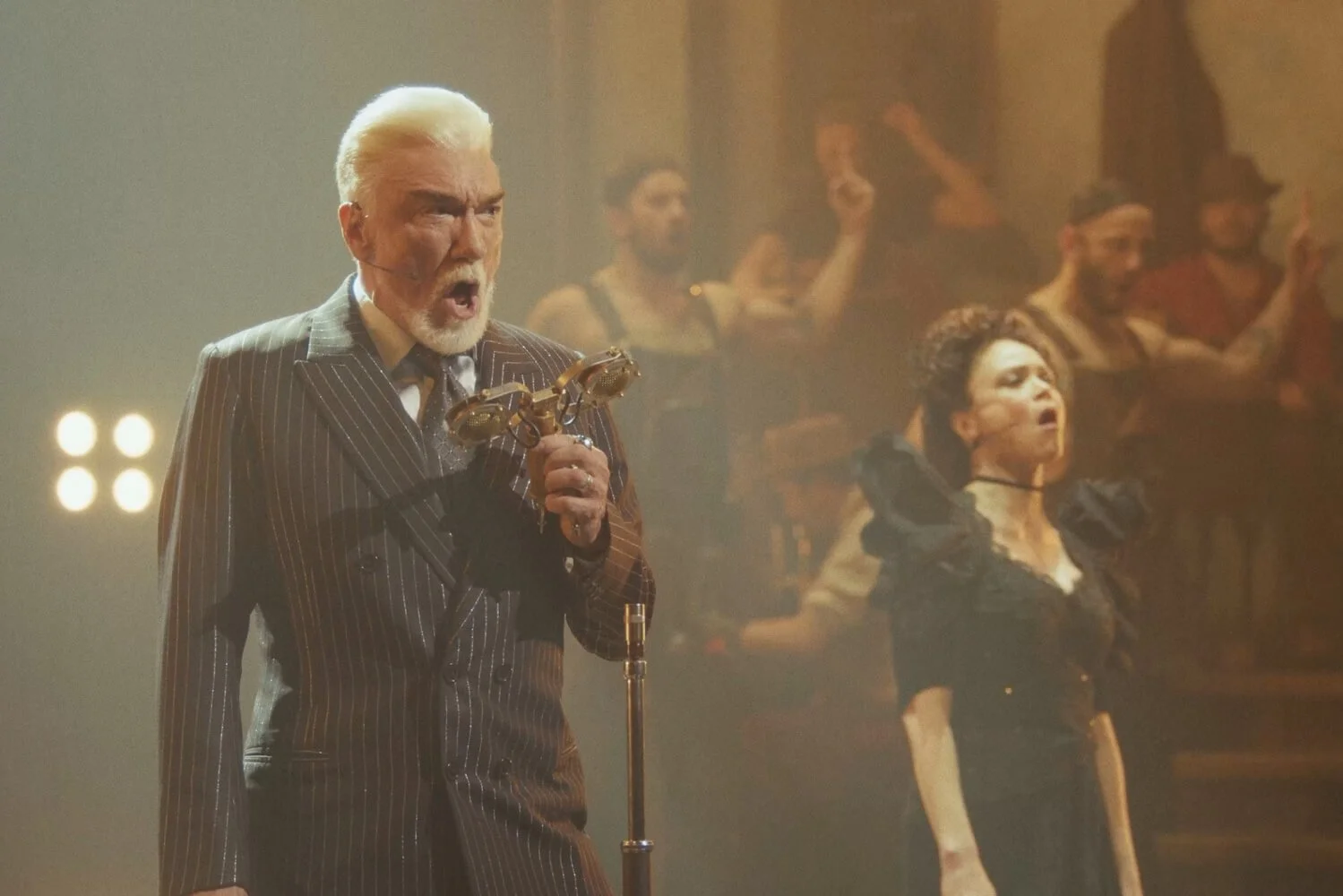
Patrick Page (Hades) and Amber Gray (Persephone) © Crosswalk and LD Entertainment
The unexpected success of the proshot shows that there is a market for these types of live recordings beyond mainstream successes like Hamilton. The proshot achieved massive critical acclaim and a remarkable 97% on Rotten Tomatoes, quickly earning back the $2 million it cost to film. Part of its success certainly came from reuniting the fan-favourite Broadway cast. Many felt that this was the last chance to see them in Hadestown. At the same time, it brought attention to the West End cast, which was already known among fans because of its cast recording. This essentially doubled the number of original casts one could watch in one performance. However, I would argue that another major reason for its success is certainly that Hadestown: The Musical takes itself seriously beyond just being a stage capture: rather, it fully embraces the film medium. Its effective cinematography distinguishes it from older stage captures or the notorious ‘slime tutorials’ recorded from a completely static viewpoint. There is much to gain from watching the proshot alongside the live version, instead of as a mere supplement of it.
Sing it again! Hadestown is still running in some cinemas in Edinburgh. Exact screening times can be found via the booking button on https://www.hadestownfilm.com/home/. It has been available for purchase on Prime Video since November 9, 2026.
Cover Image: Eva Noblezada © Crosswalk and LD Entertainment