The Paradox of Anonymity in Fashion: Margiela and Masking
BY JENNIFER GREENE
Is it possible to be fully anonymous? What is our fascination with anonymising others?
The example of designer Martin Margiela (Martin and Maison) unmasks these questions. In the fashion industry, in which visibility and personality are conventions, the practice of masking models can either have unique artistic value or restrict the collaboration between designer and model. Within this debate, we must consider questions of fame, imagination, objectification, vision, and ego, which leads us to ask: is a model supposed to be an autonomous agent, or merely a designer’s canvas? Ultimately, I find that masking can often result in the objectification of women in the fashion industry.
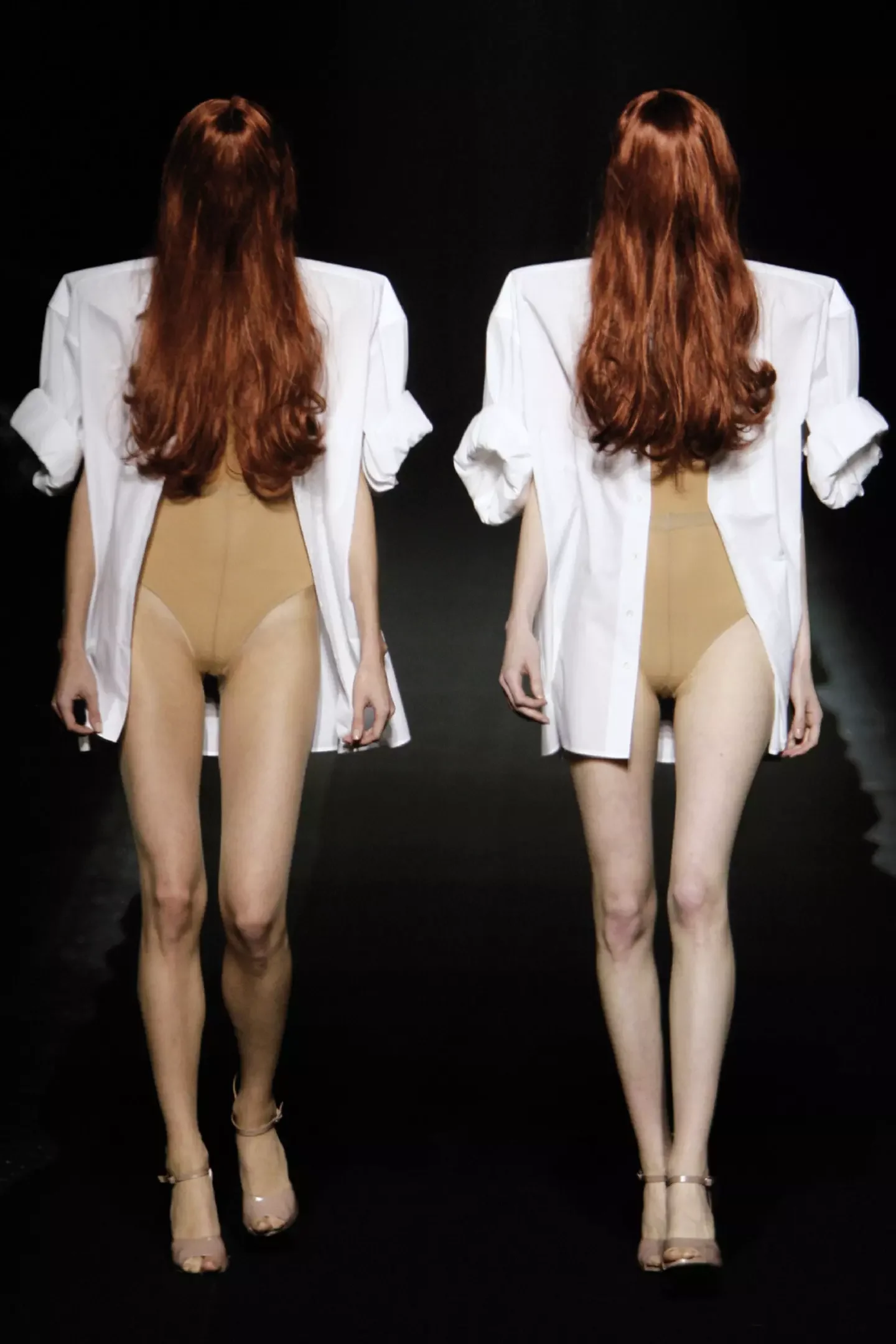
“Anonymity”, via Maison Margiela
Martin Margiela shows us the impossibility of full anonymity in the fashion industry, subverting the idea of art that is detached from the artist. His nonconformative, hidden appearance, amidst the many egos of celebrity culture, has received applause from all directions, which has paradoxically only served to increase the spotlight on him. He is characterised as an egoless, ubiquitous, invisible creator– some would even say, biblical: in an interview, one fashion editor noted, ‘He looks like Jesus.' The mystery of Margiela’s identity creates an imaginative gap for the public to construct his personality. In my research, I found that every article online which compliments Martin Margiela’s anonymity included, without fail, a photograph of his unsmiling face between paragraphs. Not only does this defeat his supposed anonymity, but it contributes to the paradox that Martin Margiela is ‘one of fashion's most recognisable identities by refusing, precisely, to have one.’
Mystery sells because it fascinates us. In Anonymity and the Social Self, philosopher Steve Matthews explores the reasons why someone might choose to be socially anonymous. Mathews writes that a desire for anonymity can come either from a ‘fear of censure’ or from wanting to participate in something without accountability. We might view anonymity as a form of reticence, or self-preservation. These competing interpretations make it difficult to explain why someone would choose anonymity. However, this is central to the myth-making of the fashion industry– Alistair O’Neill at UAL claims, ‘The fashion industry is built on myths,’ as they sustain the narrative of an alluring, mysterious creative. Such myths contribute to successful brand marketing.
The Margiela House is founded on this aesthetic of anonymity, and it is essential to note how this affects the people of the brand– specifically, female models. In this article, we’ll look at masking in an abstract lens and, more specifically, at Margiela’s famous masked models.
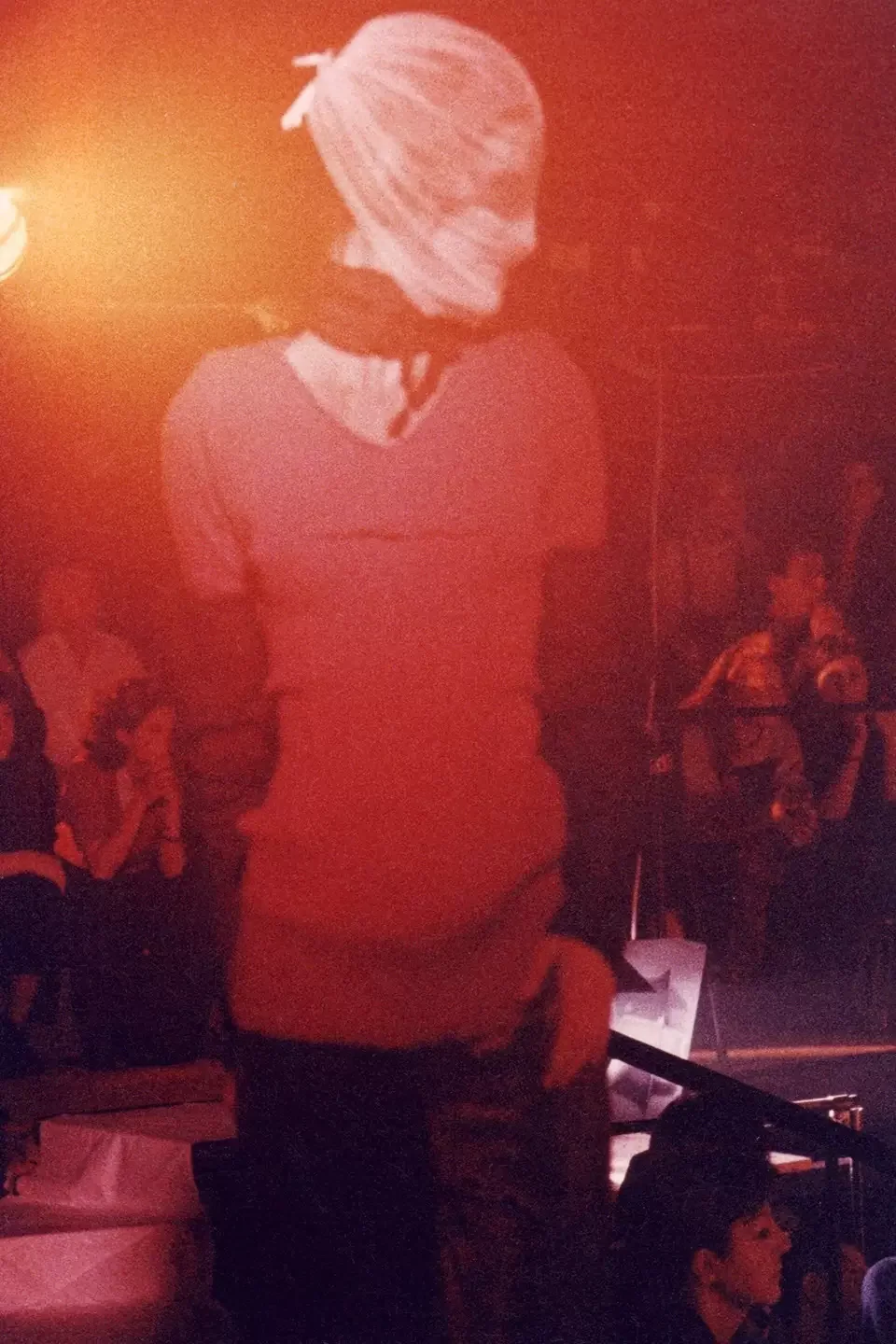
“Anonymity”, via Maison Margiela
One writer describes Maison Margiela’s style as ‘based on a cerebral approach to the deconstruction, reinvention and redefinition of the silhouettes of men and women.’ However, if we look at the House’s origins in the 80s, this is not obviously the case. Models wore skin-coloured pieces of fabric over their heads, sometimes with red lipstick over the mouth area. The intention of masking was to draw attention to the garment and not to the wearer, effectively turning women into walking mannequins. The pictures from this show are uncanny. The mannequins were not neutral or genderless: their red lipstick clearly signifies the gender of the wearer, attaching an obvious indication of femininity. It allows the audience to see the sex of the person but not the person themselves. I find that this has a fetishistic effect, as it fails to scrutinise the ridiculousness of beauty standards or the fragility of gender identities. Instead, patriarchal principles of muting and concealing women are preserved. This masking subverts the conventions of fame and visibility in fashion by removing someone’s identifying features, and therefore, their identity. It subverts our perception of models as autonomous actors, posing the question of whether masking women is genius or an act of objectification.
However, if we look at the broader debate on masking, we see that it can be used for positive creative purposes. According to Burton, masks fascinate us because they disrupt our innate desire to easily classify things and people. Our fixation on masks centres around the act of unmasking– the excitement of unveiling a mystery. Masks can also be deeply intimate because of their proximity to the body: we might think of the mask as ‘mobilised by the body’. Today, the masks at Margiela often celebrate artisanal craft, highlighting the valuable skills that have been put into their creation, as well as the richness of materials going into their elaborate, kaleidoscopic, and intricate detailing. As such, these masks have become a form of visual language and creative expression. Masks suggest a fluidity of identity– a deliberate absence which we are permitted to fill with our imagination. The facelessness of the model allows us to create our own image of who they might be; in this process, we engage more with the design than with the person who wears it.
This introduces the question of what a model is supposed to be: an autonomous actor, or a vessel? Personally, I find the concept of ‘model-as-canvas’ to be quite restrictive to the fashion industry. There are countless ways for models to contribute to another’s artistic vision without being completely silenced. A model’s particular personality and performance can emphasise the effect of the design on the audience. Many designers handpick models for specific purposes, which can be hugely beneficial in creating a memorable fashion show. If there is a lack of collaboration between models and designers, the artistic vision suffers.
Furthermore, anonymity is a luxury that models cannot afford because of the nature of their work. Models are constantly exposed to harsh criticisms from the media, and women are especially targeted, with articles that describe their eating habits, highlight scandals, and broadcast personal attacks. These negative assumptions about the personalities and lives of women stem from misogynistic views and impossible expectations for women in the modelling industry. This disrupts the communication and productivity between artists and models, and is ultimately regressive to the creation and exploration of good art.
Ultimately, there are many pitfalls to the anonymising of models within Maison Margiela, and exploring this contributes valuable discourse to the fashion industry. Of course, Martin Margiela’s personal choice to remain anonymous should be respected. I do not fully condemn the house, nor its founding designer, but we cannot assume that masking functions the same way for designers and models. The choice to mask models can fulfil a creative purpose, but our conversations about the artistry of anonymity must continue to highlight the autonomy of models, encouraging relationships between models and designers that value clear communication, productivity, and creativity.
BIBLIOGRAPHY
Burton, Laini. 2026. Masked: Anonymity, Empowerment, and Identity in Fashion and Popular Culture. Bloomsbury Visual Arts.
Johanna Agerman. 2009. “Interview: Martin Margiela.” ICON Magazine, July 17. https://www.iconeye.com/back-issues/martin-margiela.
Matthews, Steve. 2010. “ANONYMITY and the SOCIAL SELF.” American Philosophical Quarterly 47 (4): 351–63. https://www.jstor.org/stable/25734161.
Pauline Petit. 2019. “The Martin Margiela History.” Graduate Store - Blog, June 26. https://graduatestore.fr/blog/en/martin-margiela-the-invisible-man/.
Pintaldi, Rebecca. 2026. “Maison Margiela Is Finally Making a Film About Its Greatest Mystery.” Nss Magazine, September 8. https://www.nssmag.com/en/fashion/46737/maison-margiela-is-finally-making-a-film-about-its-greatest-mystery.