
Sense and Sensibility 2026: An Imperfectly Wonderful Adaptation
Anwen Marshall
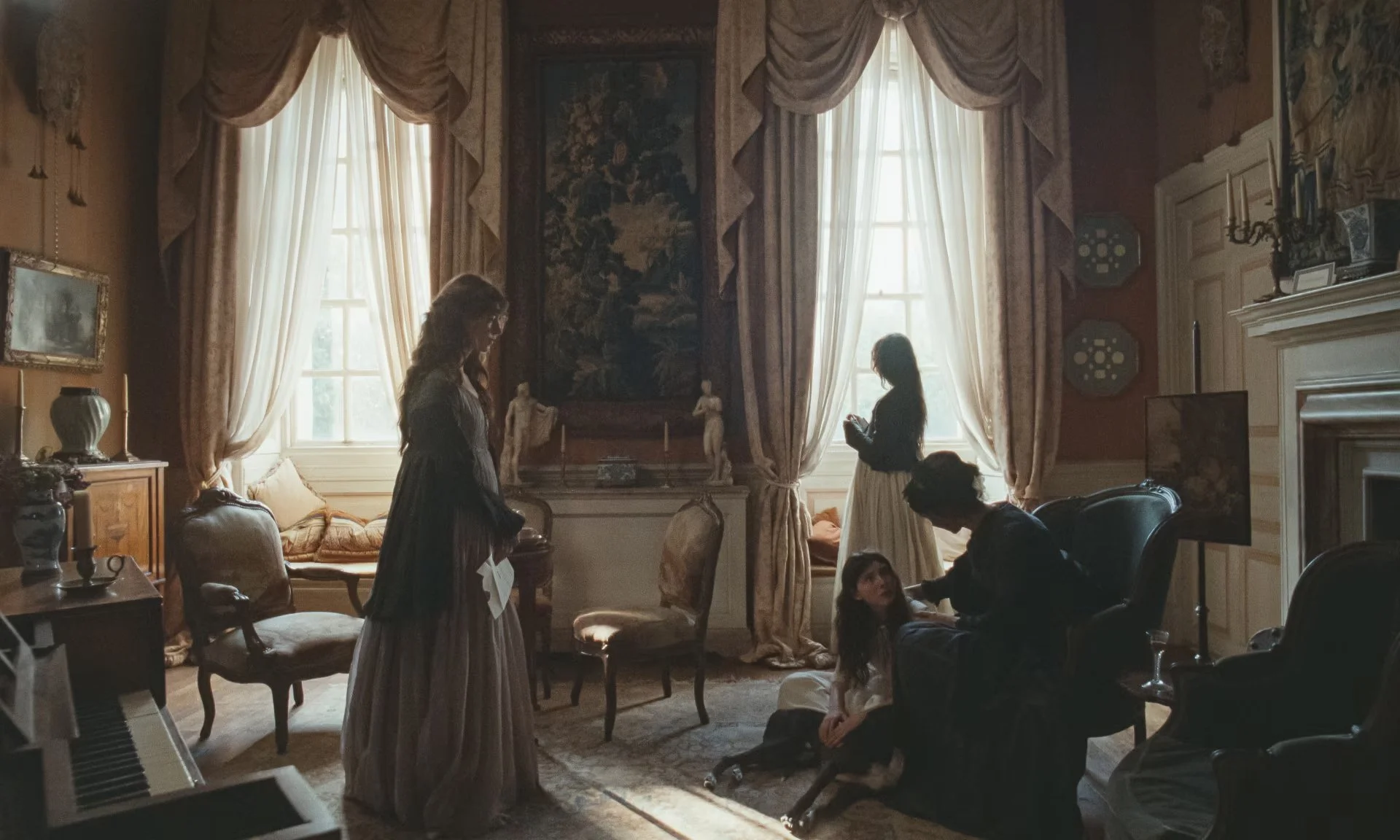
Sense and Sensibility (2026), Georgia Oakley. Image courtesy of Discover Britain.
When I first heard of Georgia Oakley’s new adaptation of Jane Austen’s Sense and Sensibility, I was not filled with excitement. I was not confident in its success. And I was utterly resolved to ignore it. My expectations for this film were largely preceded by the reputation of recent classics adaptations—particularly, Emerald Fennell’s Wuthering Heights, which I thoroughly dissected last semester. For every 2005 Pride & Prejudice or 2020 Emma, there exists a 2022 Persuasion— that movie is enough to make anyone wary of Austen adaptations. My disinterest in a new Sense and Sensibility was not helped by my status as a diehard fan of the novel’s 1995 screen adaptation, which I (famously) watched back-to-back five times in the span of one week. When the trailer was released, I quickly categorised it as just another dimly lit, brown-toned period film—the kind I typically dismiss. When my friends, aware of my interest in the story, eventually asked when I would be going to see the film, I smugly retorted that such media does not interest me. That was until my susceptibility to peer pressure (alongside the lack of desirable alternatives) overcame my distaste. Suddenly, I found myself sitting in T-Squared, trying my very best to be open-minded.
I’m humble enough to admit when I am wrong, and on matters like this one, I have never been more so.
To preface this review: I won’t pretend that this is a perfect adaptation, so I’ll begin by disclosing my contentions. There were several characters and events that lacked the time and dedication Austen originally devoted to them. Considering her significance in the novel, Lucy Steele’s character felt rather absent. In the film, Lucy takes part in only a few scenes of proper dialogue; otherwise, she is only referred to by other characters. Similarly, depictions of Marianne's illness were limited to only a single scene with the doctor, followed by a brief montage, after which she was shown to again be in good health. As a result, the final act of the film lacked much of the tension that had otherwise been very well-constructed. The proposal scene faced this problem as well: while the scene itself kept my heart racing appropriately, the dip in action beforehand made my attention waver. In a film of this length, maintaining tension all the way to end is paramount.
Furthermore, some of the dialogue within the film seems to have lost Austen’s deliberate subtlety, overtly spelling out the characters’ relationships rather than letting them be displayed by the film’s accomplished actors. While I’m on this subject — I felt that the directors did not take advantage of Daisy Edgar-Jones' exceptional abilities. While her character, Elinor, is a favourite of mine in the novel, Jones’ Elinor seemed to be lacking some of the common sense that famously drives her character. Including one too many impassioned conversations early in the film, the film rushed the gradual development of her sensibility, which severely diminished its impact at the end. I’m aware that different directors and actresses take different approaches when adapting characters, but when a character trait is as central to the movement of the whole narrative as this one (it’s called Sense and Sensibility, after all), I refuse to be openminded.
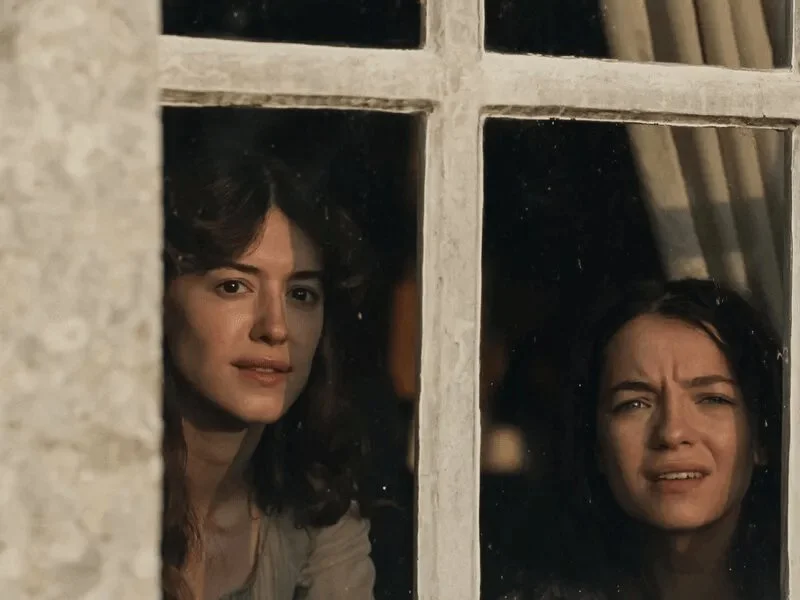
Sense and Sensibility (2026), Georgia Oakley. Image courtesy of Discover Britain.
As I have hopefully made clear, I have my problems with this film, mainly in its adaptation of the source material. But as a work of film and a cinematic experience, Sense and Sensibility is nothing short of wonderful. It is, without question, an incredibly beautiful film.
Visually, the film was stunning, with its wide shots of London and the English countryside, meticulous set design, and intentional costume designs. Changes in characters’ hair and wardrobes came with every turn of plot and setting, which beautifully displayed the developments in characters. The differences between the sisters’ wardrobes were spectacular: Eleanor’s proper, uptight outfits became looser and freer throughout the narrative, culminating in the undone beauty of her proposal scene. In contrast, Marianne consistently blends wonderfully into the wild landscapes and forests in which she is depicted. Together, these details melded together into an enrapturing experience of visual pleasure, which had me hooked throughout the whole narrative. Despite my unhealthy attachment to the novel, I confess that this film, with its intimate exploration of love, sisterhood, and society, kept my heart racing and my mind fully engaged.
While I still prefer the 1995 film overall, I’ll admit that, miraculously, there were a few things I preferred in Oakley’s version.
The highlight of the film was George MacKay’s near-perfect performance as Edward Ferras. Before watching this film, I had never paid much attention to Edward, mostly because of Hugh Grant’s rather predictable take on the character in the 1995 adaptation. Although Grant’s Edward worked, displaying excellent chemistry with Emma Thompson, he was perhaps overshadowed by Alan Rickman’s fantastic embodiment of Colonel Brandon. As a result, this key character fell to the periphery of my attention. However, MacKay’s rendition completely blew me away. MacKay’s greater presence in the narrative, combined with his agency, charm, and fantastic chemistry with Daisy Edgar-Jones, completely transcended my expectations. As a cinematic experience of romance, drama, and family, I can say little to fault Oakley’s Sense and Sensibility.
If you’re looking for the perfect experience of Sense and Sensibility, you may as well just read Sense and Sensibility. Adaptations are a tricky matter, especially when there are older versions to live up to and a fanbase to appease. As a book adaptation, I have my concerns about this film, but as an independent work, I can only give you my greatest encouragement to go watch it. Sure, there are a few surface-level faults— the somewhat strange dancing, Willoughby’s lack of presence, and its slightly poorly timed pacing, especially when compared to the 1995 version. However – and I never thought I would be saying this – I could not care less. There are some things we just love, faults and all. And Georgia Oakley’s Sense and Sensibility is certainly one of them for me.