
Theatre Review: The Shakespeare Troupe’s A Midsummer Night’s Dream
14/11/26 - 15/11/26
Directed by James Carder-Geddes
Produced by Madeleine Abignale
Review by Mary Kalinski
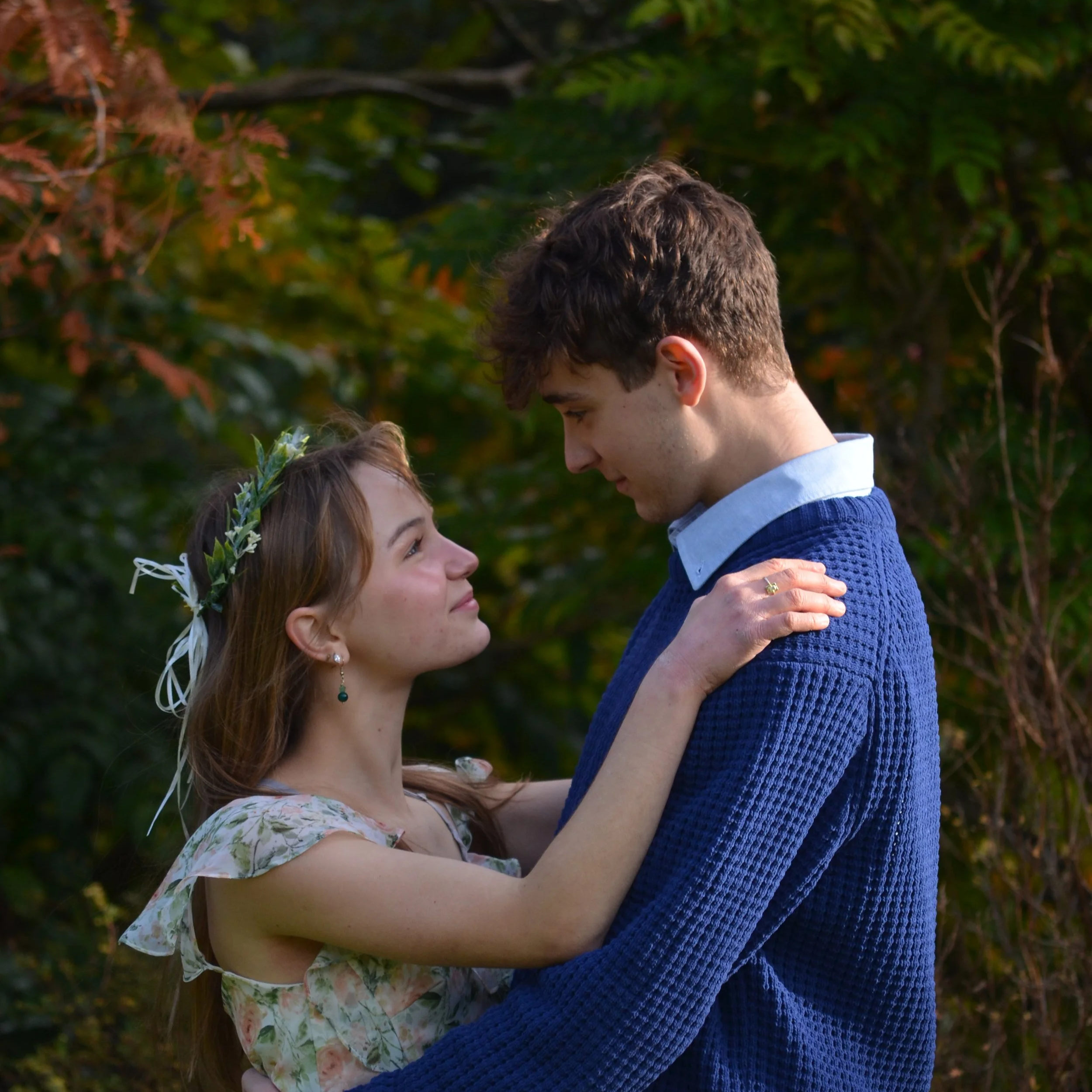
Hermia and Lysander (Margo Anderson and Harry Aspinall)
Last Saturday, I had the pleasure of watching the St Andrews Shakespeare Troupe’s staging of the classic comedy, A Midsummer Night’s Dream, which took the lush autumnal colours of the Botanic Gardens as its backdrop. As I settled into my blanket on the grass, I couldn’t help but smile at the sight of the bundled-up audience, gathering around with the community spirit that good theatre brings. Indeed, at numerous points before, during, and after the show, my hugely pleasant impression was that of watching a real labour of love unfold.
One of the many strengths of this play’s production team was their wonderful attention to detail. Incorporating a flute quintet contributed considerably to the whimsicality of the production – this group, directed by flautist Cyrus Tahbaz, injected elegance, jollity, and anticipation in the gentle strains of Mozart, Bach, Fauré, and Stamitz. I also enjoyed the simple cosiness of Hannah Wilkinson’s costuming, which evoked an English countryside feel with its collection of autumnal jumpers, Doc Martens, emerald cloaks, and floral dresses. I particularly appreciated the colour coding of the Fairies with their flower-topped headbands – something about these warm jewel tones reminded me of the colour palette of Greta Gerwig’s Little Women. A final note of aesthetic appreciation goes to whoever made the very professional-looking programs – as a Canva warrior myself, I was delighted to see the care dedicated to even this small detail.
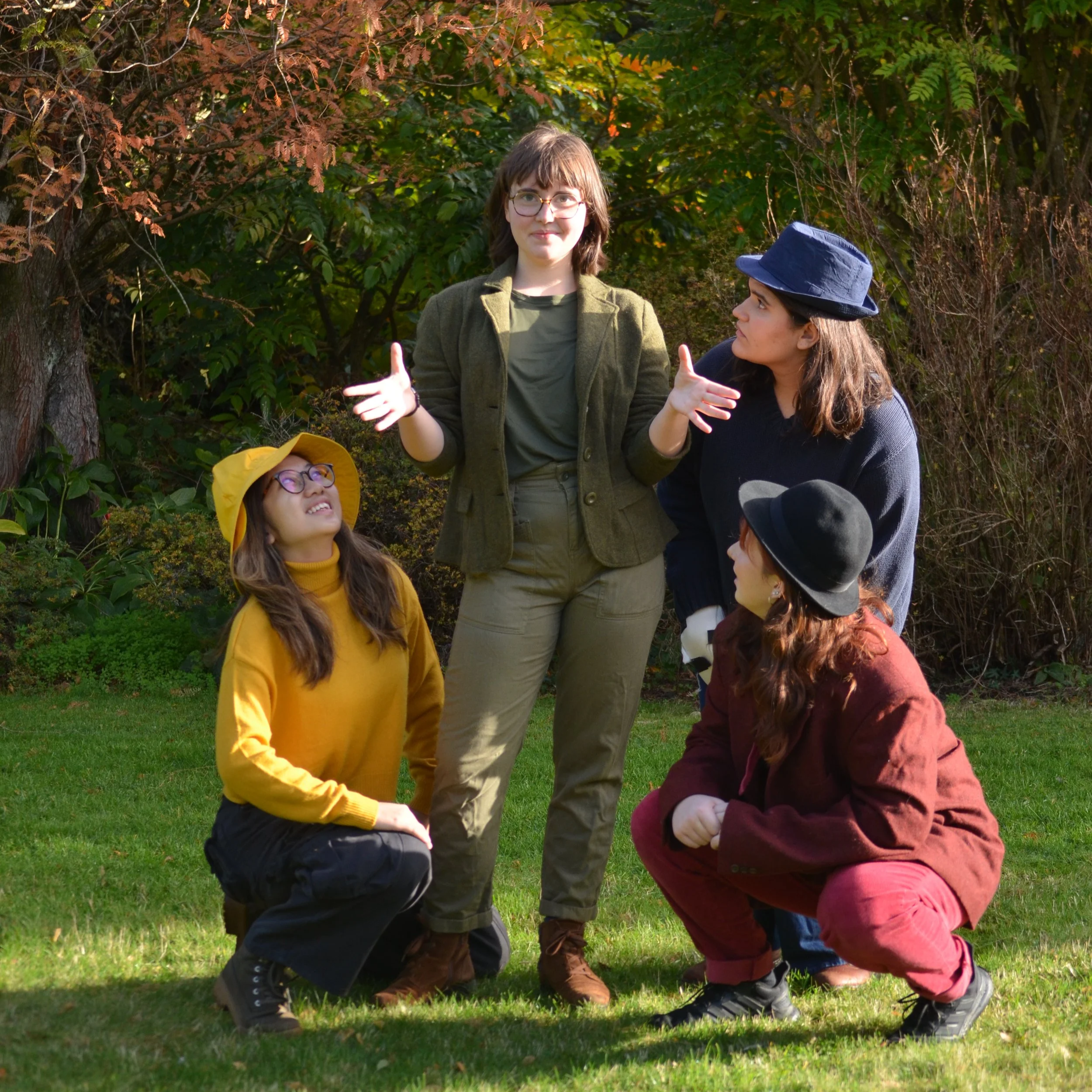
Flute (Casey Yong), Quince (Clasa Ashing), Starveling (Lucy Halpern), and Snout (Izabella Hall)
While Shakespeare in the Park is, alone, not a novel concept, this production was unique in that it was not merely a play performed outside; rather, the rugged setting provided by the gardens was completely incorporated into the play. The forest proved an ideal backdrop, as well as the occasional set piece, as when Oberon (Ellis Jones) shoved Puck (Jonathon Brown) into the bushes, resulting in the offended fairy’s legs dangling perilously in mid-air. A path behind the trees provided a surprisingly concealed backstage area, across which the actors seamlessly transitioned on and offstage. Sitting at eye level with the actors resulted in a viewing experience that was at once immersive and down-to-earth – almost like a really good version of the Christmas play scene in Little Women (sorry – I fear this has become my only cultural touchstone). Again – I don’t know if it was the Secret Santa shopping I’d done earlier in the day, the abundance of scarves and gloves in the audience, or the offer of hot chocolate at the gardens’ cafe, but there was something about this Midsummer experience that had me feeling undeniably merry. Producer Madeleine Abignale– I’ll have you know that you produced something quite wonderful here.
These feelings of merriness were greatly increased by the jolliness with which the cast presented Sheakespeare’s script. At the end of the play, a friend of mine remarked, ‘I’ve never been to a play that’s kept me laughing so continuously!’ Judging by the steady roll of laughter from the audience in all parts of the show, I’d say she was hardly in the minority. Massive credit goes to Director James Carder-Geddes, as well as this talented cast, for the hilarious staging of the play. Slapstick comedy was frequently employed, alongside impressive acrobatic acts– most notably, Demetrius (Rupert Carter)’s somersault-dive into the grass, which inspired several awed gasps (and perhaps a wince or two) from the audience. Undeterred by the cold, the actors did not shy away from stomping, laying down, or even tumbling around in the mud. Out of the cast, particular praise is reserved for Keenan Parker and Ellis Jones, who were filling in for missing actors and thus had only nine days to prepare their significant roles. The couple was appropriately stately as the engaged royal couple, Hippolyta and Theseus, contrasting delightfully with their roles as fairy rulers Titania and Oberon. Parker was hilariously manic as the enchanted Titania, furiously womanhandling the object of her devotion, a bewildered Nick Bottom (Isaac Thompson-Gibbs). Jones was particularly entertaining in a scene I found criminally underappreciated by the audience – this was when Oberon and Puck met in the woods, greeting one other with an elvish dance. When the two fairies twirled forward, touching index fingertips and then jumping back as if they’d been electrocuted, I erupted in a fit of nose-breathing laughter (you know the kind) – and was shocked to find that nobody followed suit! There is, of course, the chance that this dance wasn’t meant to be as funny as I found it. Either way, I’m not ashamed to admit that I heartily enjoyed it.
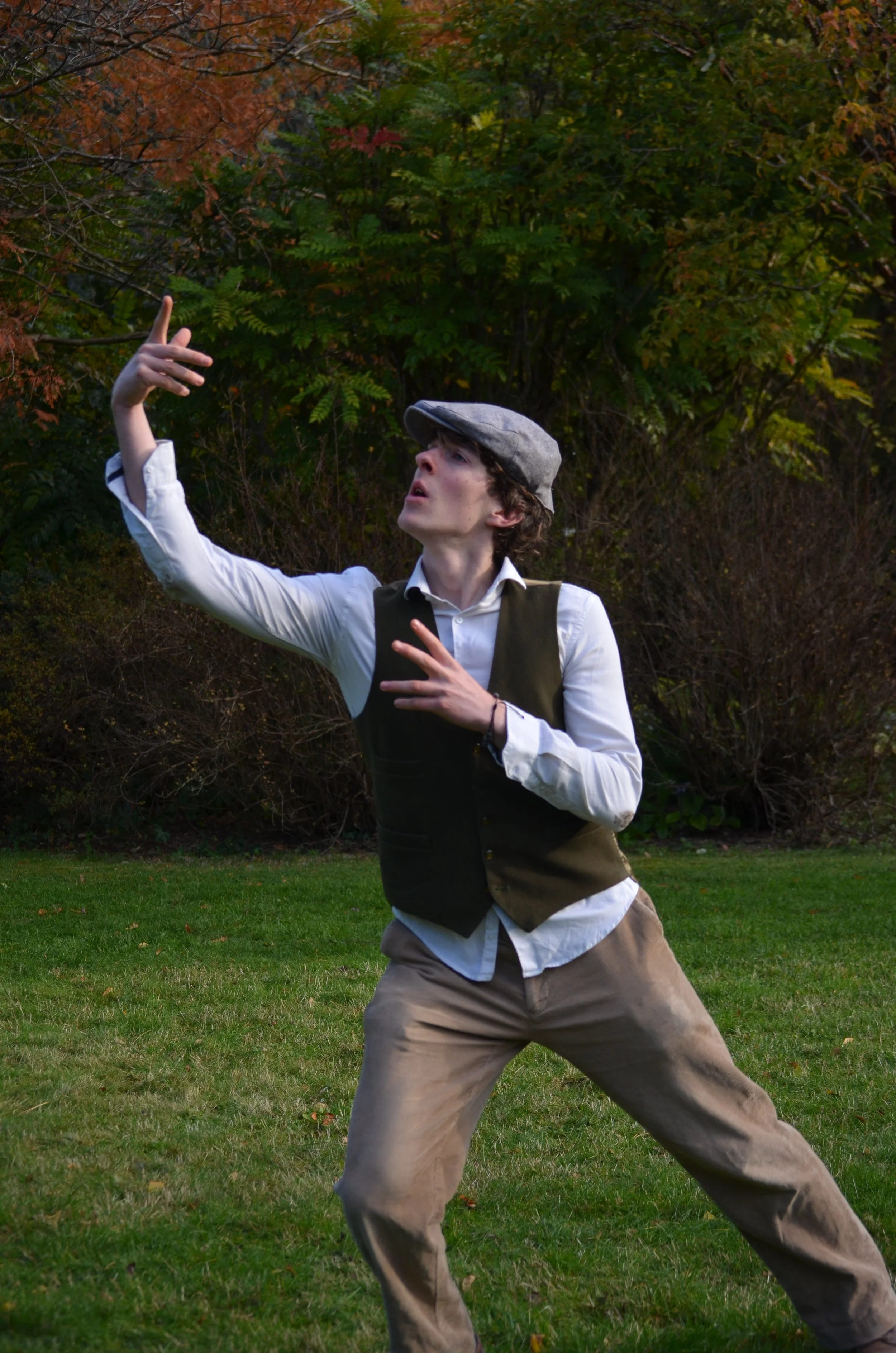
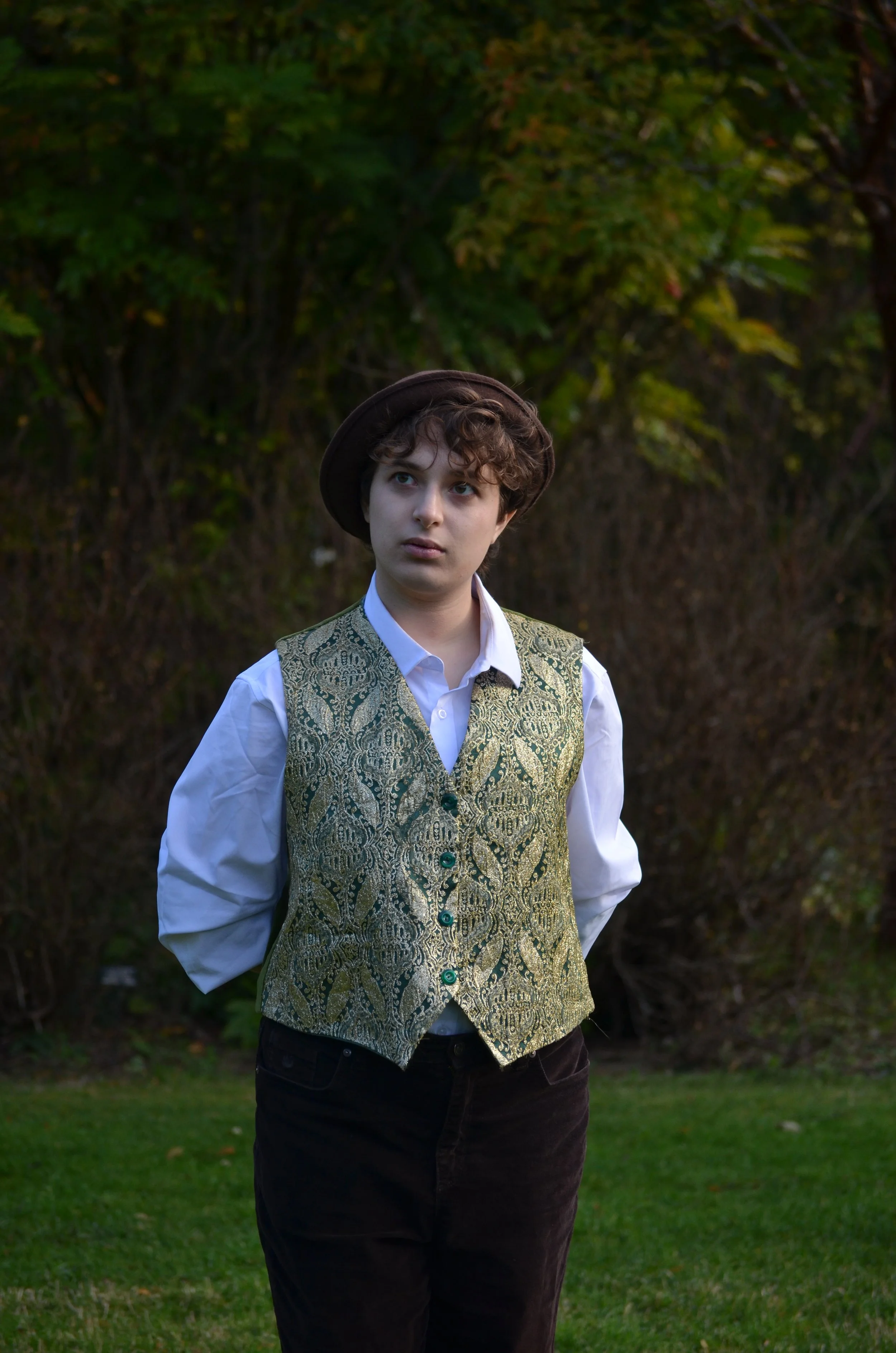
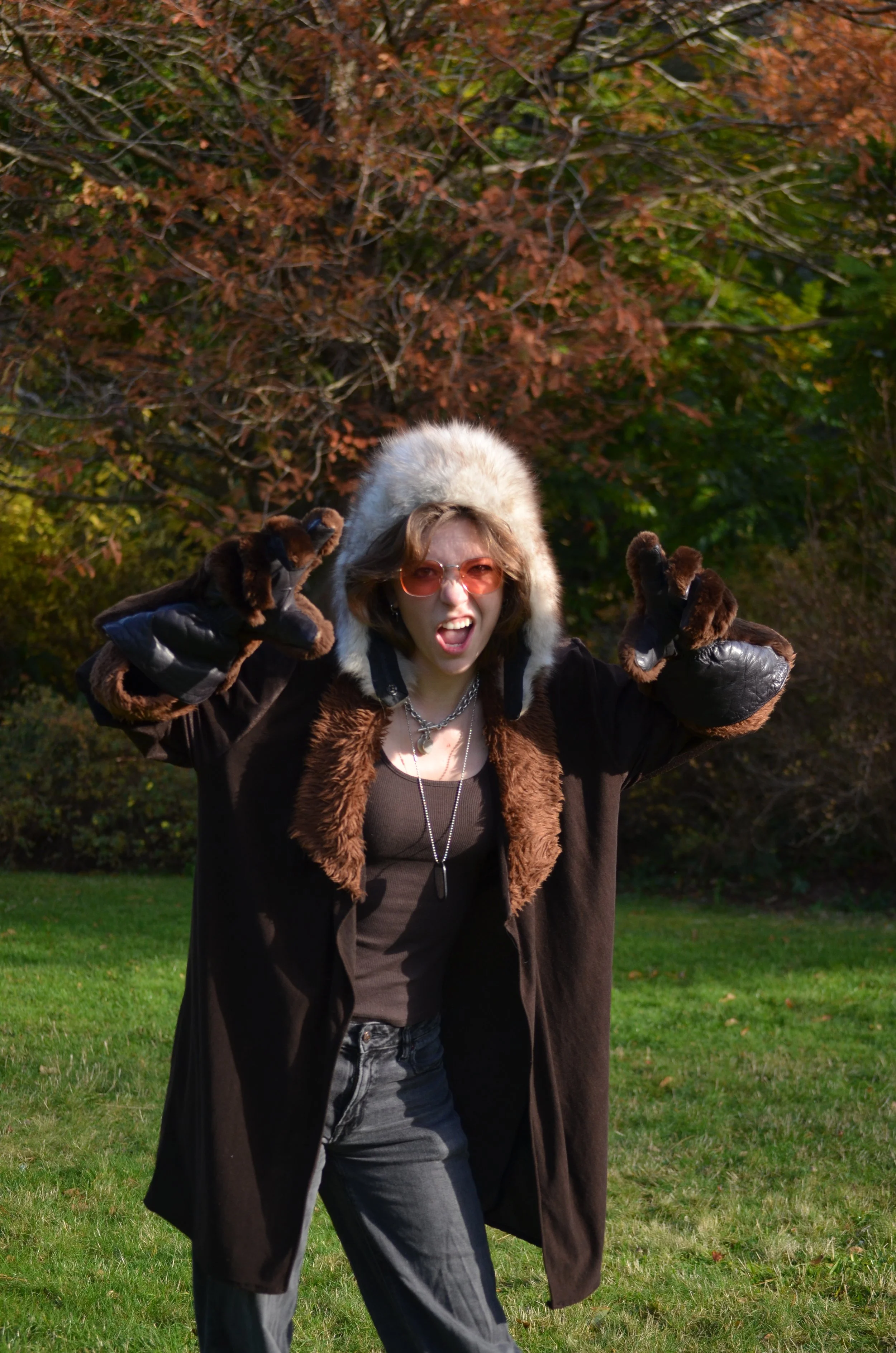
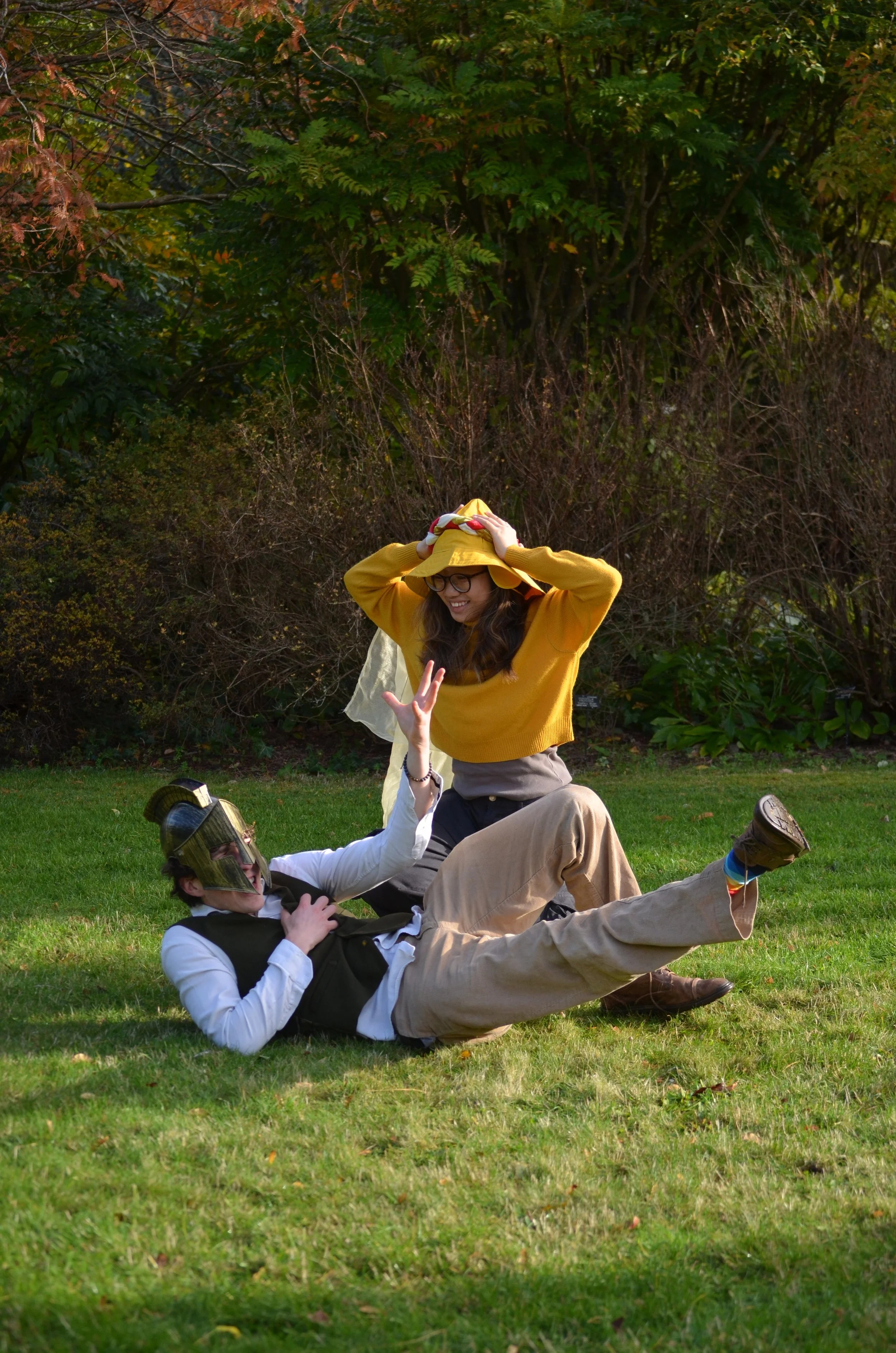
The whimsy didn’t end here: throughout the play, Jonathon Brown presented a convincingly mischievous portrayal of Puck, hopping into and out of each scene with a token grin. Similarly, the ensemble of Mechanicals/Fairies was well-choreographed and reactive to the primary action, but also full of individual talents: various Mechanical moments I loved include Quince’s summer camp counsellor x Dora the Explorer enthusiasm (this was so well-embodied that I literally could not imagine actor Clara Ashing in any other state; lest I be misconstrued, I assure you that I say this with awe); Snug/Lion (Eva Rieckewald)’s numerous roaring attempts; Flute/Thisbe (Casey Yong)’s signature lisp and violent death by stick; Starveling/The Man in the Moon (Lucy Halpern)’s sullen insistence upon the ownership of his/her dog; and Snout/Wall (Izabella Hall)’s bellowing of ‘BRICK’ as a kind of ‘choose-your-fighter' self-introduction. Finally, I cannot neglect lauding this troupe’s Bottom, played by the standout performer Isaac Thompson-Gibbs. Wholeheartedly embracing the goofiness of his character, Thompson-Gibbs pronounced each hilarious line with a relish, sending the audience into ever-increasing peals of laughter.
On to the lovers! Throughout the performance, I was very impressed by how comfortable these actors were with proverbially ‘getting up in each other's business’: these characters brawled, embraced, and even occasionally dragged each other across stage. Another audience member noted that this element is rarely 'gotten quite right’ in student productions, as it requires a significant amount of comfort and chemistry between cast members – yet here, all four relationships were extremely believable in moments of flirtation as well as rage.
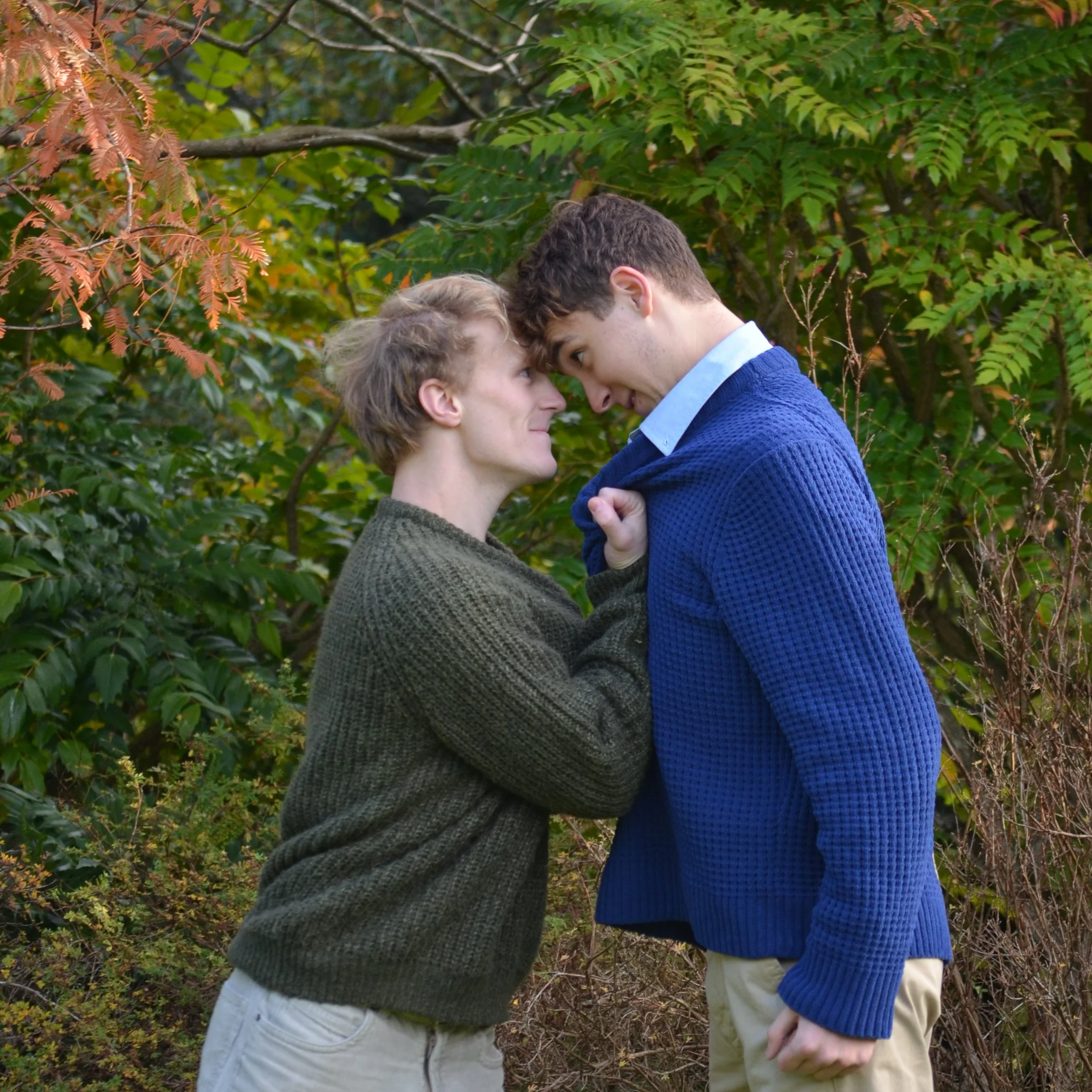
Demetrius (Rupert) Carter and Lysander (Harry Aspinall)
Harry Aspinall’s Lysander was truly fantastic – the incredible devotion with which he looked at Hermia (Margo Anderson) was almost unsettling. This intensity was channelled perfectly into scenes of competition against Demetrius, resulting in a hilarious display of masculine bravado. Rupert Carter’s Demetrius was very intelligently played – by nature, a more changeable character than Lysander, this Demetrius spoke lines of wit and cruelty with a subtlety that allowed him to bring the best out of each character with which he shared a scene.
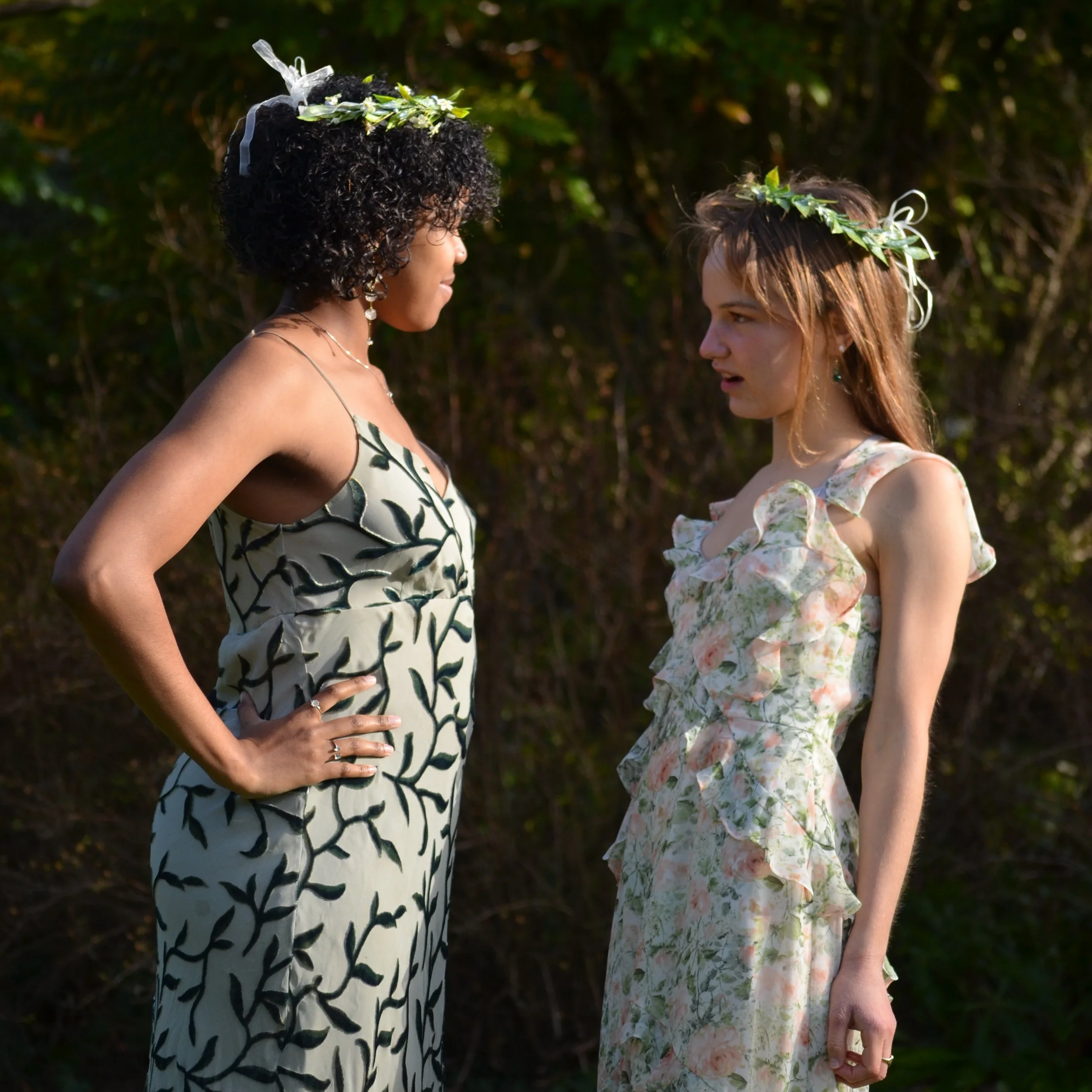
Helena (Gabriella Kalayamotho) and Hermia (Margo Anderson)
Likewise, Margo Anderson was an utterly perfect Hermia, displaying all the springlike charm befitting this Athenian noblewoman. Yet, her character was not at all static: she expertly showed discomfort with Lysander’s forwardness without suggesting any dislike of him, and her later anger at Helena (Gabriella Kalayamotho) didn’t seem to come from a place of unreasonable bitterness, but from a place of honest insecurity at having been spurned. Her excellent counterpart was Kalayamotho’s Helena, who somehow managed to make this desperate character (famous for begging Demetrius to ‘use me as your spaniel!’) very likeable. Avoiding the creation of a melodramatic diva, Kalayamotho’s yearning was instead quite earnest, garnering the sympathy of the entire audience. Having once played Helena myself (#subtleflex), I was particularly impressed by the ever-present humour Kalayamotho maintained in her lengthy monologues, imbuing each scene with a freshness that made her a joy to watch.
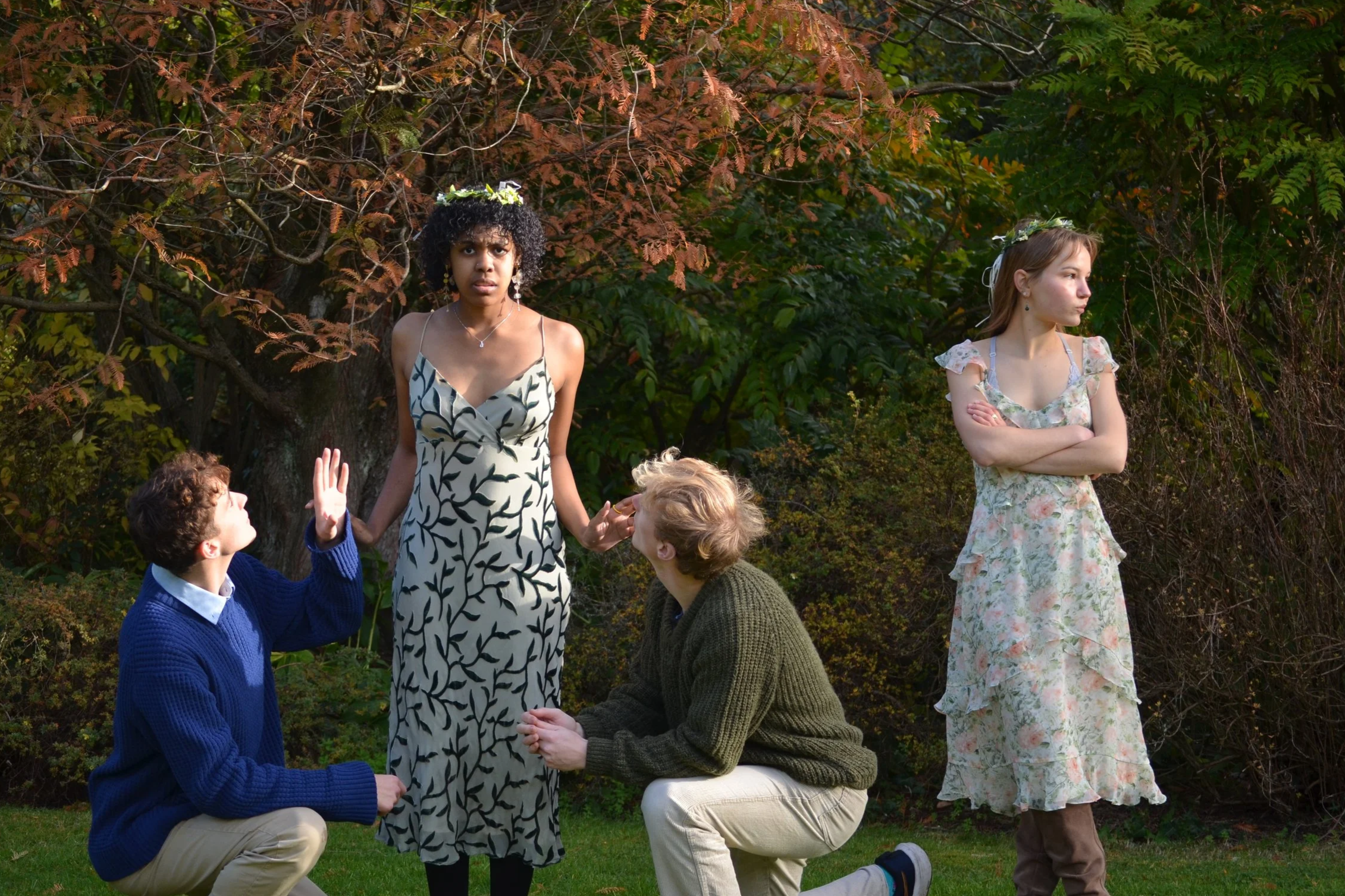
While I have very few issues to take with this performance, I’m still undecided about one moment from Act 3 Scene 2, during which the confusion of the enchanted lovers dissolves into utter chaos. In the middle of the scene, the growing antagonism between Helena and Hermia is momentarily suspended as Helena tenderly recounts the history of their friendship, tracing back to their childhood spent with ‘two seeming bodies but one heart’ (Act III, Scene II). However, considering the length and frequency of Helena’s speeches, it can be difficult to perform these scenes without seriously slowing the pacing of this climactic scene. In Carter-Geddes' version, Lysander and Demetrius helped to circumvent this issue by keeping up their comedic competitiveness behind the actresses, flexing their biceps and winking at the audience in turn. This is where my uncertainty comes in: while this choice absolutely prevented the scene from losing momentum, it was, indeed, brought about by a good bit of upstaging on the part of the male actors. As a result, audience members may have missed key context about the women’s deep kinship, resulting in a slightly two-dimensional conflict. Ultimately, this is a question of personal taste; while devoted Shakespeare fans may have preferred to place greater emphasis on the monologues, I’d wager that the choice to maintain a light-hearted tone was appreciated by the production’s energetic audience. And indeed, the minuteness of this critique points to the overwhelming success of this production.
In short, the St Andrews Shakespeare Troupe’s staging of A Midsummer Night’s Dream was nothing short of delightful. Do yourself a favour and keep an eye out for their next exciting project!
Photo Credit: Varish Duriseti