‘One Mother, Many Mother Tongues’: Representing Motherhood across Time & Space
By Devyani Rao
This September, I was very fortunate to visit the art exhibition One Mother, Many Mother Tongues in the Bangalore’s National Gallery of Modern Art. Curated by Naman P. Ahuja and Andrea Anastasio, the exhibition explores the relationship between mothers and their children as a symbol across cultures. While exploring a vast array of portrayals of motherhood–figures, spanning from ancient Greece, Rome, and India, the exhibition sustained sensitivity towards cultural differences. In doing so, the exhibition displayed a commitment towards identifying unexplored perspectives without making generalised cross-cultural connections.
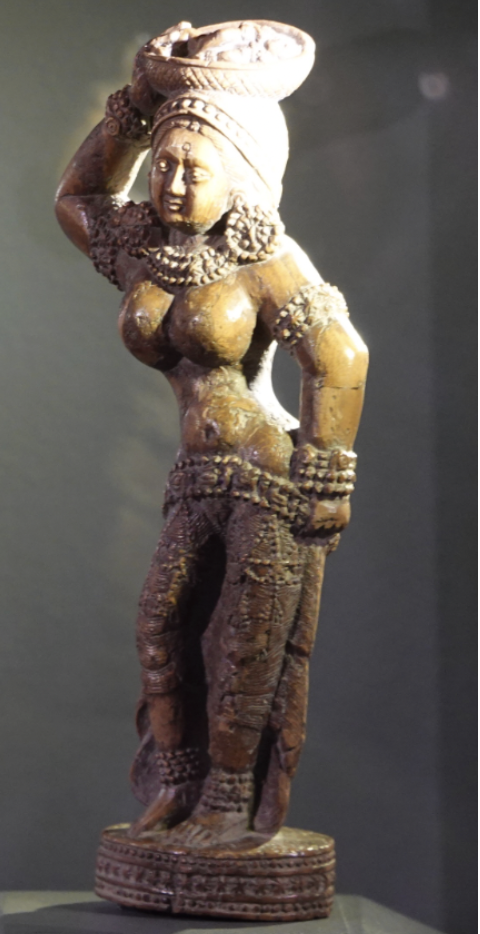
Unknown artist, Mother and Female Child, 1st to 2nd century AD
Mothers elevated to the status of divine worship took center stage: each artwork occupied the place of an idol in a temple. In spite of this, my favorite piece was one set aside from these divine mothers– a sculpture titled, 'Mother and Female Child.’ This was the only piece to depict a child established as female and a mother who is not presented as a goddess. Originating from Bengal, the miniature consists of a woman holding a basket over her head, which contains detailed outlines of a female child. Despite the sculpture’s size, its sculptor spared no detail– close inspection with a magnifying glass reveals intricate threads of stone jewels around the mother's clothes and the child's basket. To me, this figure upsets patriarchal notions that prize male children by placing the female child above her mother’s head as the object of focus.
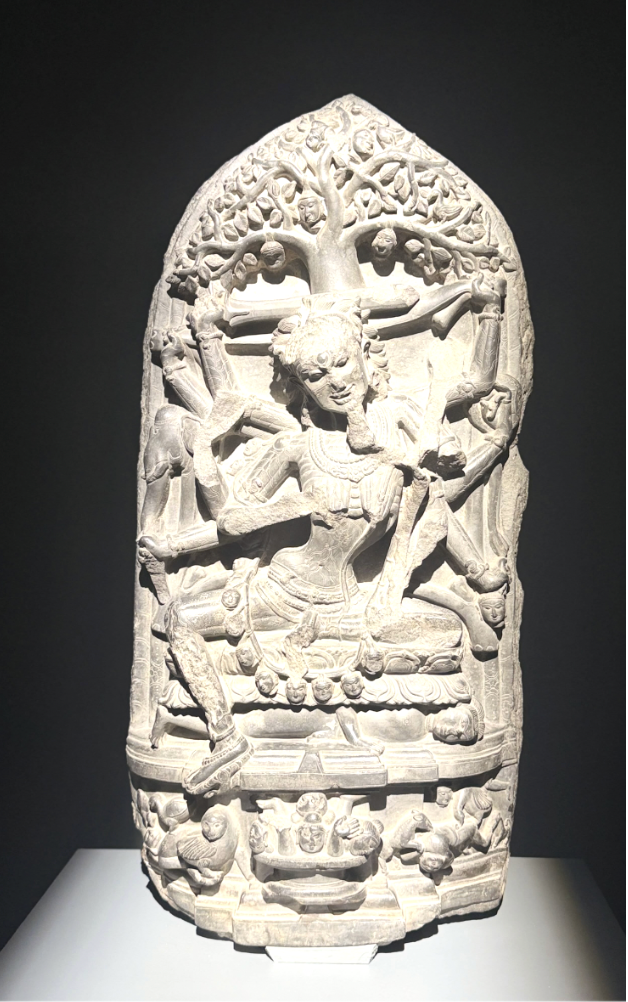
Unknown artist, Sculpture of Chamunda, 11th-12th century
Another subversive figure was the sculpture of Chamunda, a Hindu goddess. Represented with multiple arms and in the midst of destruction, the Chamunda sculpture depicts a mother capable of taking life just as easily as she creates it. The skulls dangling over Chamunda's head create a sense of terror, establishing her dual identity: she is at once a mother and a demon with destructive power. Some areas of the stone sculpture appear rougher than others, such as the limbs on Chamunda's right side. The difference in texture used here seems to disrupt the connections between motherhood, safety, and comfort.
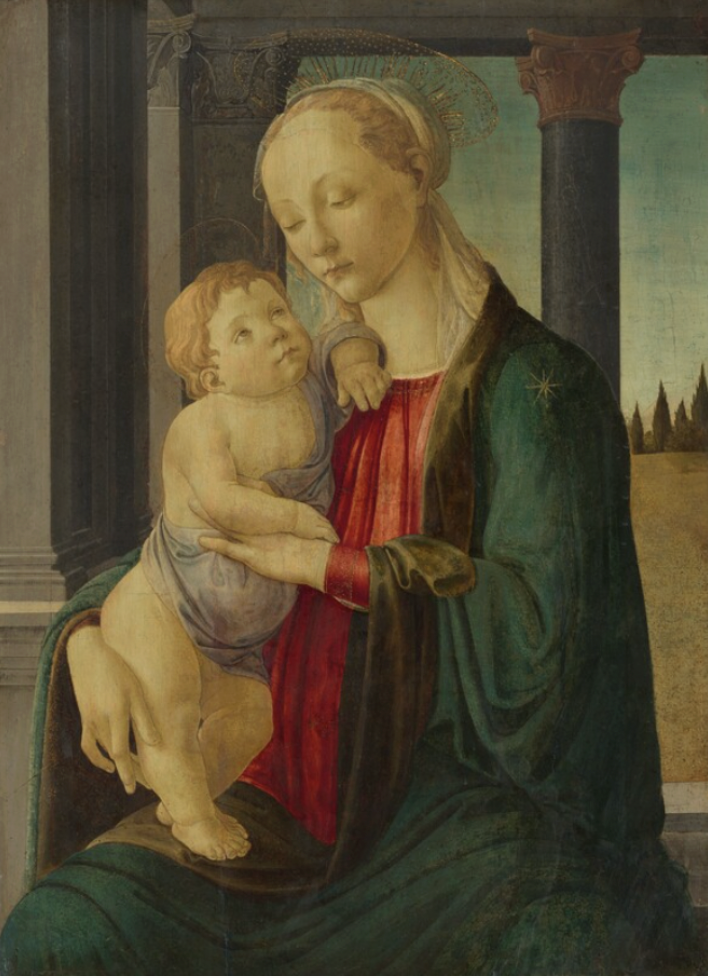
Sandro Botticelli, Madonna and Child,1446-1510
Botticelli's 'Madonna and Child' made its first ever appearance in Bangalore at this exhibition. Compared to many of the other figures on display, the mother and child depicted here seem relatively peaceful. The gaze of the Madonna is pensive and introspective, while the baby in her arms is full of life. The expression of the baby Jesus is much more pronounced: he appears to be bursting with life, with wide-open eyes. His exposed flesh also contributes to this appearance of energy, contrasting his mother's pale, silken clothes.
The peaceful solitude of Botticeli's Madonna is replaced by sternness in the Mater Matuta statues, which were produced in Italy c. 4th century BCE. Interestingly, these mothers have stony expressions and hold their heads upright, rather than looking at their viewers. The sharpness of their gaze is complicated by the figures of the children lying on their laps. Almost shapeless ovals, these children appear lifeless, as motionless as loaves of bread. While their mothers are clearly human, their children are reduced to passive, inactive subjects. Yet, these figures still exude power.
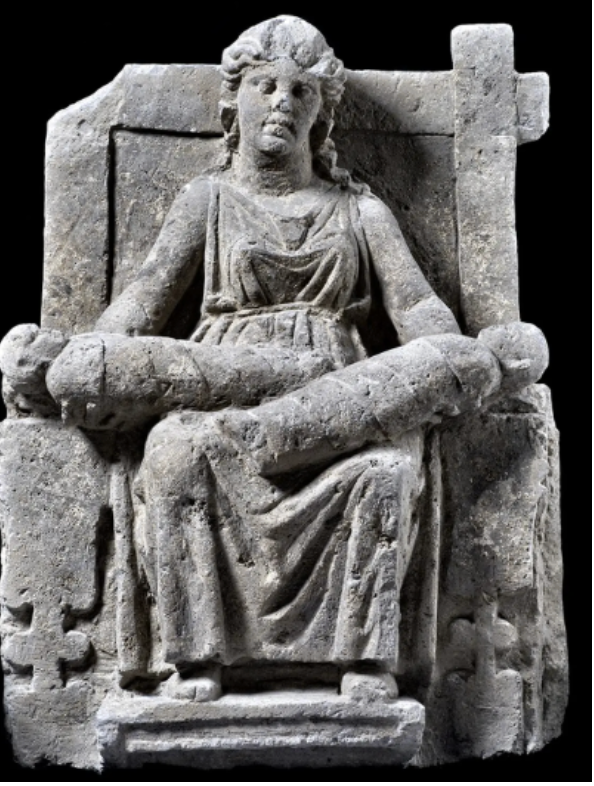
Unknown Artist, Mater Matuta Sculpture, 6th to 1st century BCE
This eclectic array of pieces creates no singular, collective impression. Viewers are invited to consider cultural specificity alongside universal aspects of motherhood. Just as motherhood is depicted in various visual forms in this exhibition, One Mother, Many Mother Tongues encourages a consideration of differences in maternal experiences across culture and time.