
The Werner Bronkhorst Effect: How Social Media Revolutionised the Arts
By: Imogen Taylor
Everyone who is on social media can think of at least one seemingly useless trend they have witnessed. Those interested in visual art have seen everything from time-lapsed portraits to paint pouring ASMR; these videos work well with the snappy, short-content forms of Instagram and TikTok.
But for artists, these trends are more than a waste of time. Social media provides an excellent platform for social networking: artists with successful online fanbases are met with a surge of interest from members of the public willing to buy their art. Gone are the days of gallery exhibitions and word-of-mouth recommendations. By relying on algorithms and followers, artists are saved time and money and are gifted fame in the process.
A prime example of this is Werner Bronkhorst, a contemporary South African Australian artist. You may already recognise his name, but if you don't, I'm sure you've seen his thickly layered, sculptural backgrounds and hyper-realistic miniature figures on your For-You page. He is also famous for his grand-scale charcoal drawings of cars, which are partially covered with short, painted phrases.
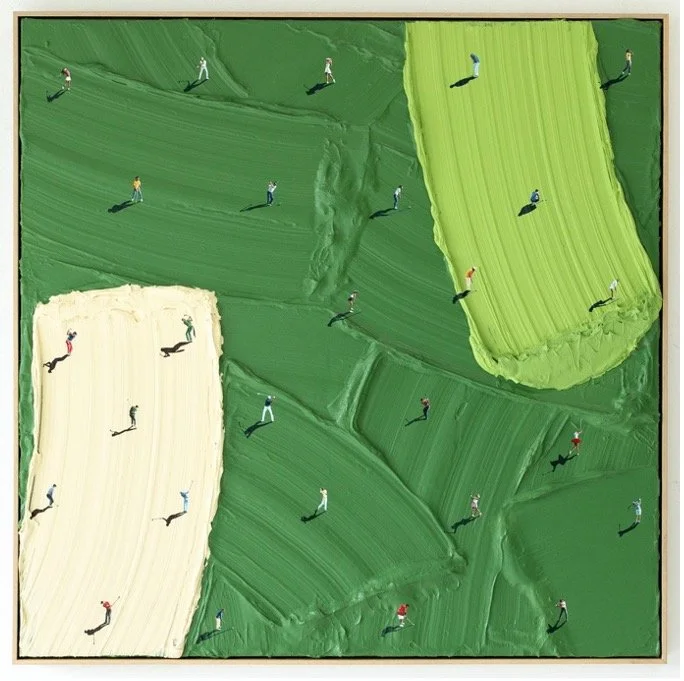
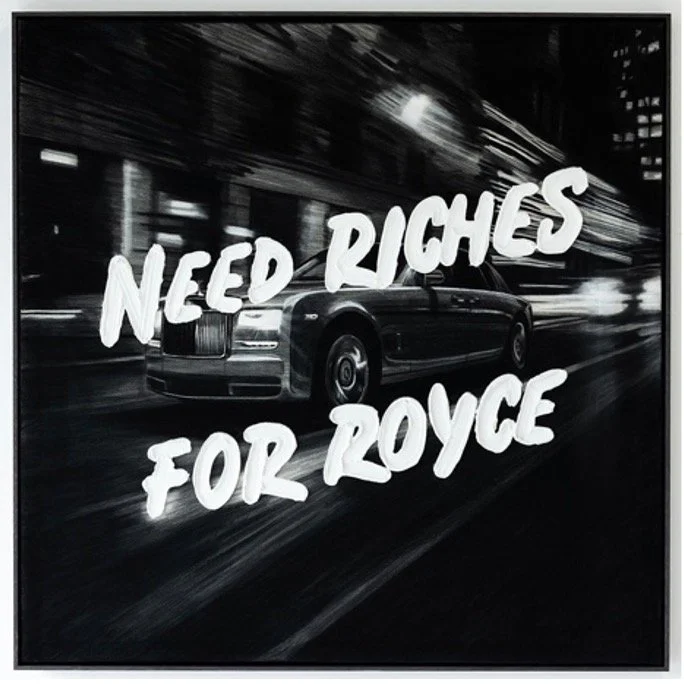
In only a few years, he has already amassed over 1.5M followers on Instagram and 24M likes on TikTok. His entertaining videos, which show the behind-the-scenes of his artistic process, make his art feel accessible to all. Focusing on relatability, his collections spark memories of holidays and travel, playing or watching sports, and other scenes from daily life. One of my favourites is Sandy Road, which features in his recent ‘Crack’ collection (which sold out online in 20 minutes!). The work is inspired by the Beatles’ Abbey Road album cover, depicting four women of different ages crossing a sandy path on their way to ride the waves. Here, the cheerful subject and bright colour palette makes me reminisce about my own family holidays on the Cornish coast, showing how Bronkhorst’s work evokes a nostalgic response, even with its formal simplicity. Despite his relatable subjects, the artist’s prices are much less obtainable, with works such as Sandy Road selling online for $45,000. This is a testament to Bronkhorst’s self-made success through his clever handling of social media.
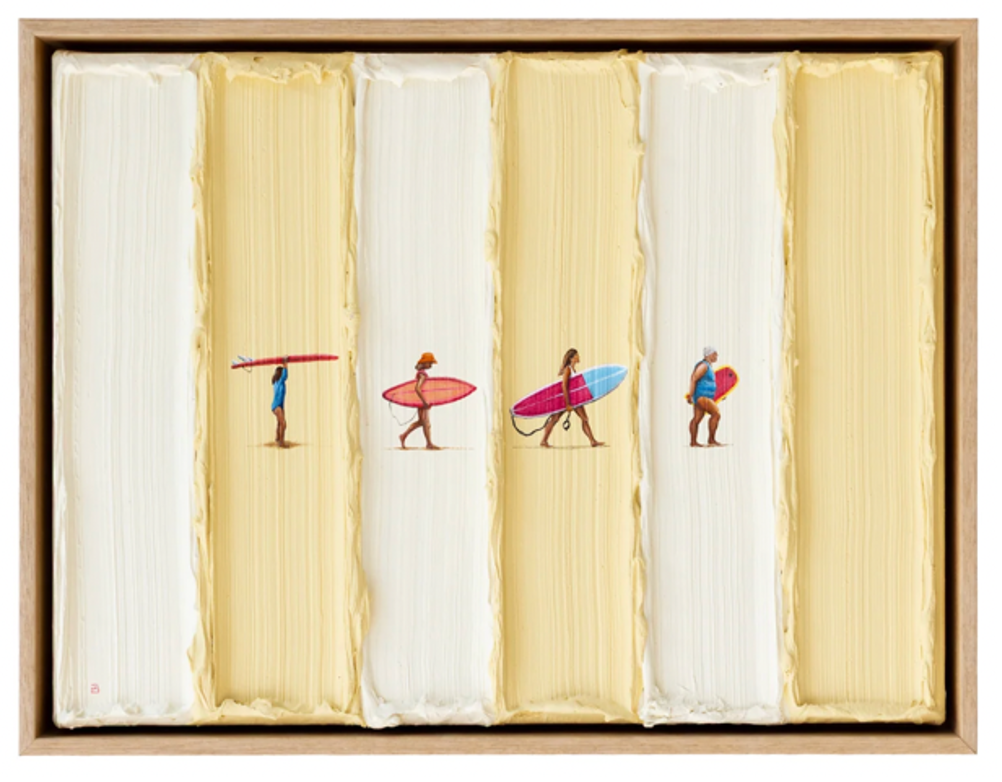
SANDY ROAD, 2025, 31 x 41 cm, Acrylic and Acrylic Gel on Canvas
The artist paints, manages, exhibits and sells all his work, making it clear that Bronkhorst knows his way around strategic business marketing. He understands how to appeal to every audience, from young parents to F1 fans: Bronkhorst’s social media pages features both his small children and a recent collaboration with Lando Norris. Even those who are uninterested in art have seen Bronkhorst on their feed due to his skilful handling of the algorithm. Conscious that not all can afford to buy his original works, Bronkhorst sells prints as well, furthering his effort to be accessible (although these are still too pricey for the average student’s living room!).
Throughout his body of work, it is evident that Bronkhorst is most inspired by the pop art of Andy Warhol and Keith Haring and the abstract expressionism of Willem De Kooning. However, Bronkhorst's most recent reinterpretation takes Mark Rothko's abstract work as its inspiration, adapting his famous geometrical layout and bold colours in a minimalistic depiction of a tennis court. This is best seen in Get Served, in which Bronkhorst utilises the iconic colours of Wimbledon to depict a simplified, heavily textured tennis scene.
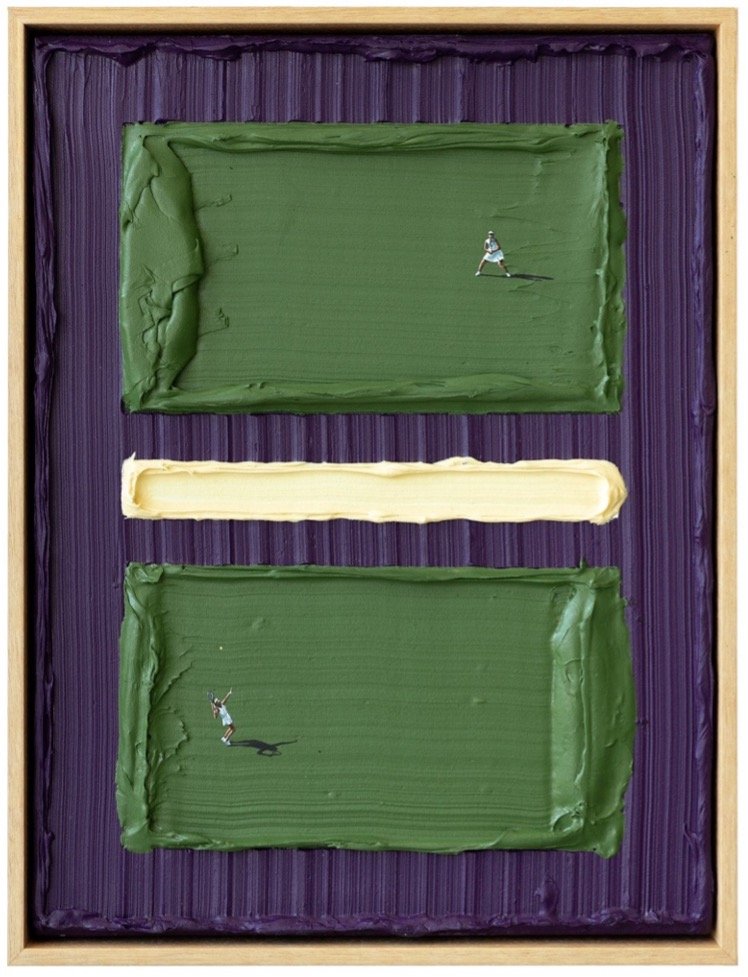
GET SERVED, 2025, 41 x 31 cm, Acrylic and Acrylic Gel on Canvas
Just as Bronkhorst used these artistic masters for inspiration, so do current artists look to Bronkhorst’s works for theirs. Within the past week, I have seen numerous online recreations of the artist’s paintings and have watched as overt copies go viral. Most are merely smaller scale works in the Bronkhorst style, often made for a loved one who enjoys a particular sport. Yet artistic reproduction toes a dangerous line, especially in the age of Artificial Intelligence; we can only imagine the threats of intellectual theft and unauthorised reproduction that artists such as Bronkhorst face due to their consistent online output. Here, we might ask: what is the line between free marketing and creative theft? Accredited imitations often increase Bronkhorst’s popularity because viewers know that Bronkhorst’s works are the originals. But if too many people begin to paint their own copies, his work may begin to lose its originality, as well as its relevance. Thus, we might ask: how far should Bronkhorst let his marketing go?
Bronkhorst’s rise to fame at 24 years old contrasts the paths of many great artists in the past – think of Van Gogh, who only reached the height of his fame after his death. But while social media is a great tool for advertising, it also holds serious risks. Who knows if Bronkhorst’s popularity will continue to flourish, or if it will dwindle under the pressure of cycling online trends, through which some fresh-faced artist might easily take his place. We can say with certainty that social media has revolutionised the arts, allowing more opportunities for budding artists by providing them a platform with a global reach. But this kind of reach is only possible if you learn how to build your brand, if you are always one step ahead of the trend cycle, and if you can handle your many imitators, viewing their efforts as motivated primarily by an admiration for your craft.